AREAS OF APPLICATION
Numerous uses in anesthesia
Less fear, fewer sedatives and a higher acceptance rate of regional anesthesia through audiovisual sedation with video glasses?
HOW IT WORKS
Positive distraction through audiovisual decoupling / sedation
Pain, anxiety, and stress then get worse when patients focus on them. The reaction here is often the use of more pharmaceutical sedation or the general selection of general anesthesia . The result, however, is longer treatment times and increased care costs .
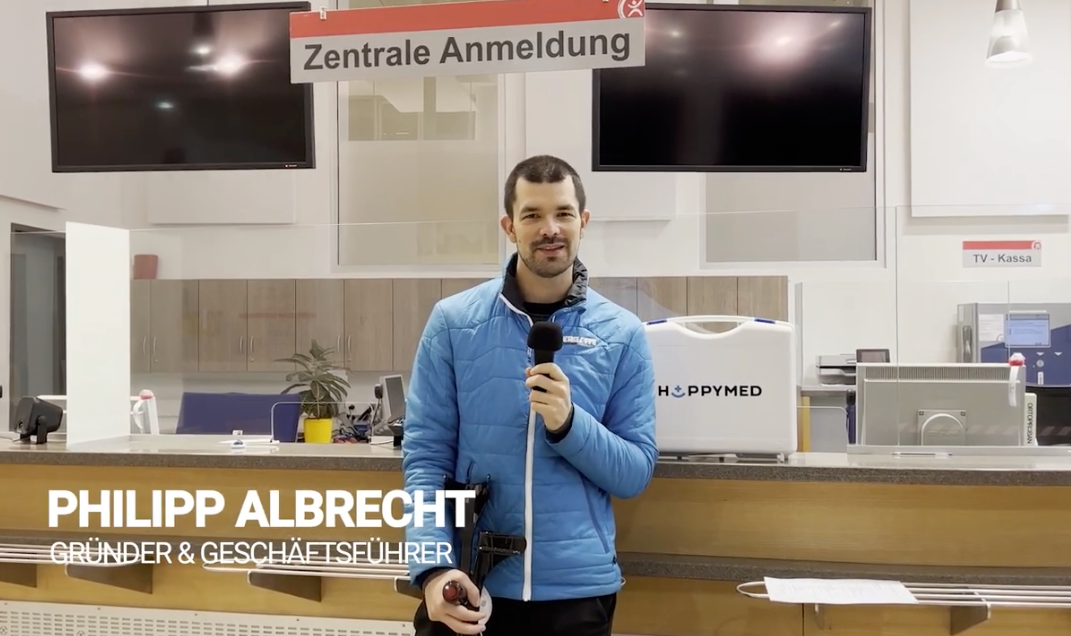
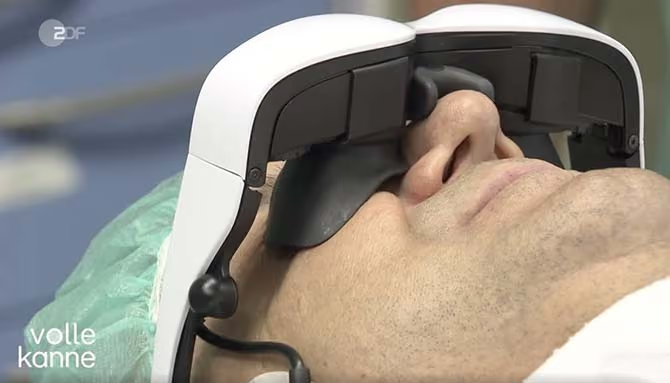
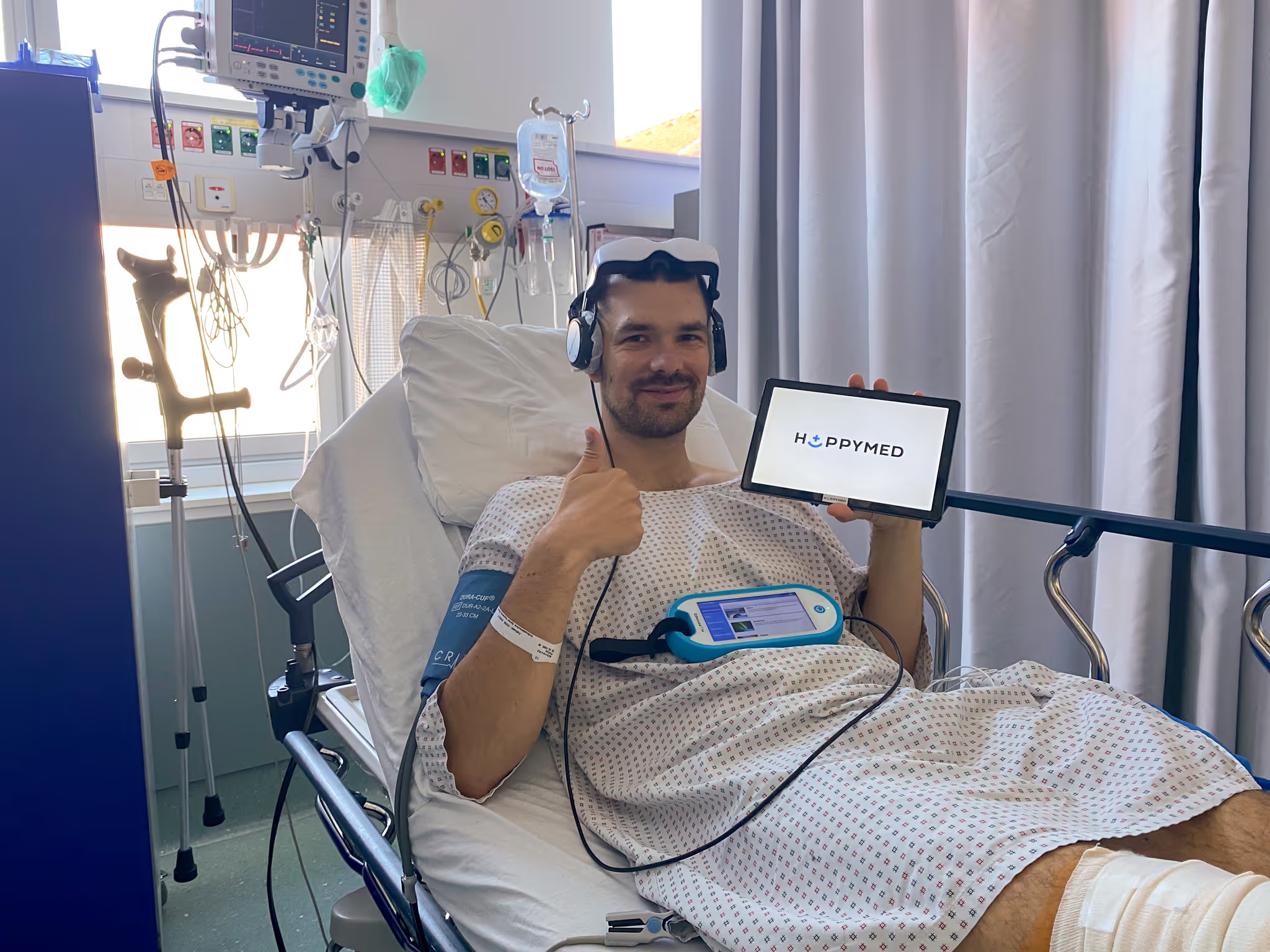
These problems can now be solved differently by audio-visual decoupling of patients from their environment or audio-visual sedation. The HappyMedSystem with video glasses , touchscreen and ergonomically adapted surround headphones makes it possible. Patients are positively distracted and reassured by being able to watch feature films, nature films or documentaries. Scary sensations then take a back seat. This reduces the feeling of stress, fear and pain and you perceive the treatment as shorter and more pleasant.
SCIENTIFIC EVIDENCE
Numerous studies prove the effect
The effect of audiovisual sedation is constantly being investigated and the following positive effects have already been demonstrated:
Higher acceptance rate of regional anesthesia
Lower risk, fewer complications and fewer follow-up costs
Less stress & anxiety
Lower pain perception
Less sedatives
Faster recovery
VIDEO GLASSES IN USE
Audiovisual sedation in practice
See how HappyMed video glasses transform everyday work in anesthesia – for doctors, nursing staff and patients alike.
New study on HappyMed video glasses
Highly significantly less anxiety and fewer sedatives in 80% of all interventions
In the anesthesia department in the Schrobenhausen district hospital, the effect of HappyMed video glasses was examined on 88 patients over a period of 5 months .
The 5 most important results:
The patient’s subjective level of anxiety could be significantly reduced by using the glasses.
Over 70% of the patients felt more relaxed when wearing glasses during the procedure. Over 75% of the employees found the treatment situation to be more relaxed when the patient was using the glasses. From the medical staffs’ point of view, over 85% of the patients have benefited from using the glasses.
According to the assessment of the treatment team, sedatives could be partially or completely reduced in over 80% of the interventions .
Due to the hospital structure, glasses were used in over 80% of the procedures, especially in older patients (> 50 years). Although the glasses are a high-tech product, it has been shown that even less tech-savvy patients can use the video glasses without any problems.
The decision to introduce video glasses in the anesthesiology department was beneficial from the staffs’ point of view. Staff mentioned a high degree of enrichment of their work and many advantages of the use of the video glasses in the areas of patient comfort and reducing the use of sedatives. Ultimately, everyone said they’d recommend the product to others.
AREAS OF APPLICATION
Use with different variants of regional anesthesia
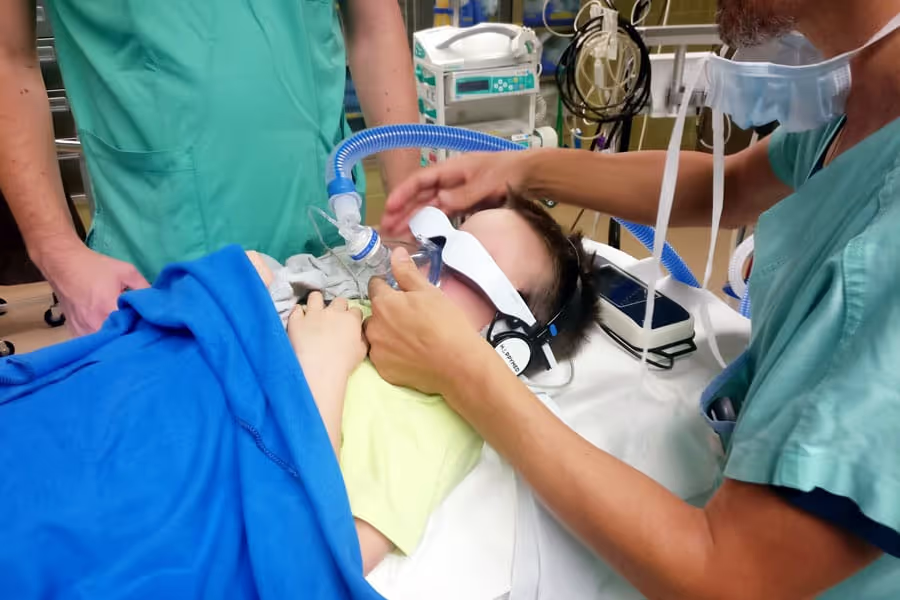
The video glasses are well received by young and old, because there is something for everyone in the extensive media library – even for children. Despite the distraction, doctors and nursing staff can communicate with patients at any time, because the headphones can be deactivated on the outside.
The Sana-Dreifaltigkeits-Krankenhaus Cologne uses the glasses for knee or hip replacement surgery . Because here regional anesthesia with video glasses is a good alternative to general anesthesia. The Heart Center Leipzig uses the advantages of HappyMed for cardiac pacemaker and defibrillator implantations and Asklepios uses the video glasses for operations under regional anesthesia as well as for chemotherapy or cardiac catheter examinations .



PRE- & POSTOPERATIVE
Use in the induction room and recovery room possible
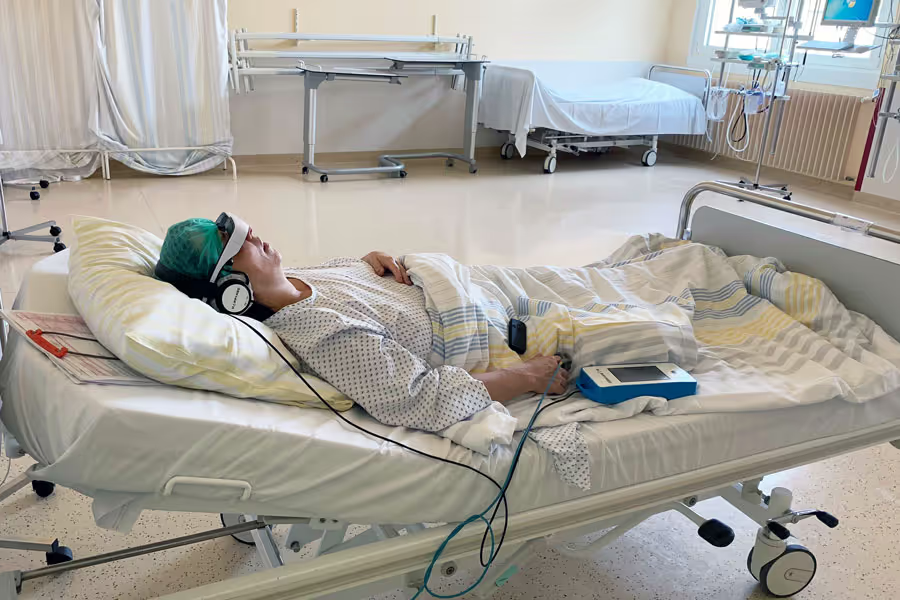
HappyMed video glasses are used in many hospitals before an operation or before the induction of anesthesia. The advantages are also in the distraction from what is happening and thus a reduction in the stress level. With the glasses waiting times can be bridged well without the patient focusing all his thoughts on the upcoming procedure.
The use of video glasses relieves the nursing staff, because the amount of care required is reduced .The certified medical product is child’s play to use by staff or patients themselves and has been extremely well received. At the beginning of 2017, a systematic evaluation of 110 HappyMed patients who were operated under regional or general anesthesia (use of glasses in the recovery room) was carried out at three locations of the Sana clinics. 92 percent of the patients were satisfied with the effects of the video glasses and would use them again if they had another operation or would recommend them to other patients.
A study at Franziskus-Hospital Harderberg found a significantly higher acceptance rate of regional anesthesia when procedures were performed in combination with HappyMed video glasses. The greatest potential lies in outpatient and orthopedic procedures, which can generally be performed well under regional anesthesia.


in detail
HappyMed in detail: How exactly do the video glasses work?
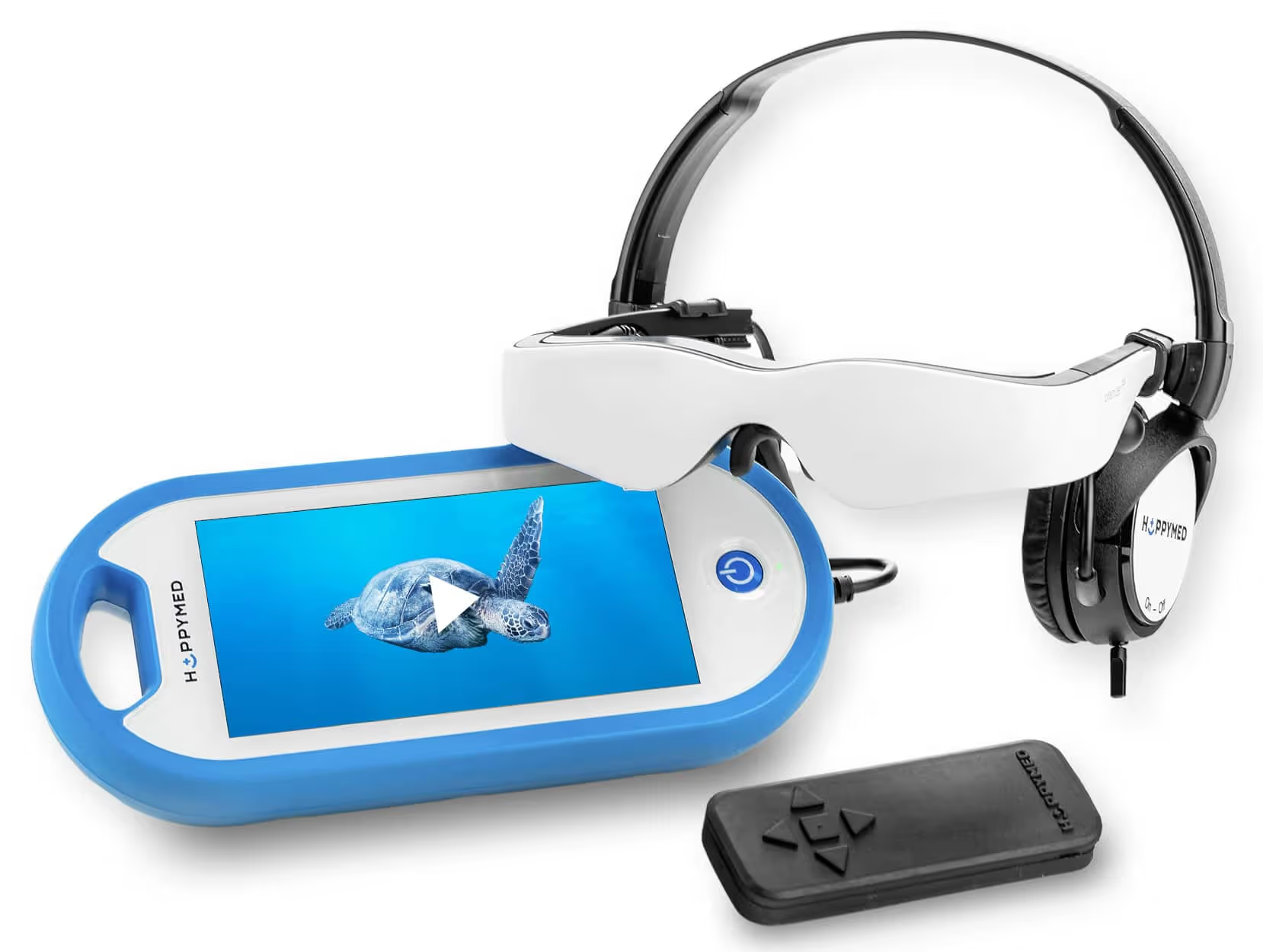
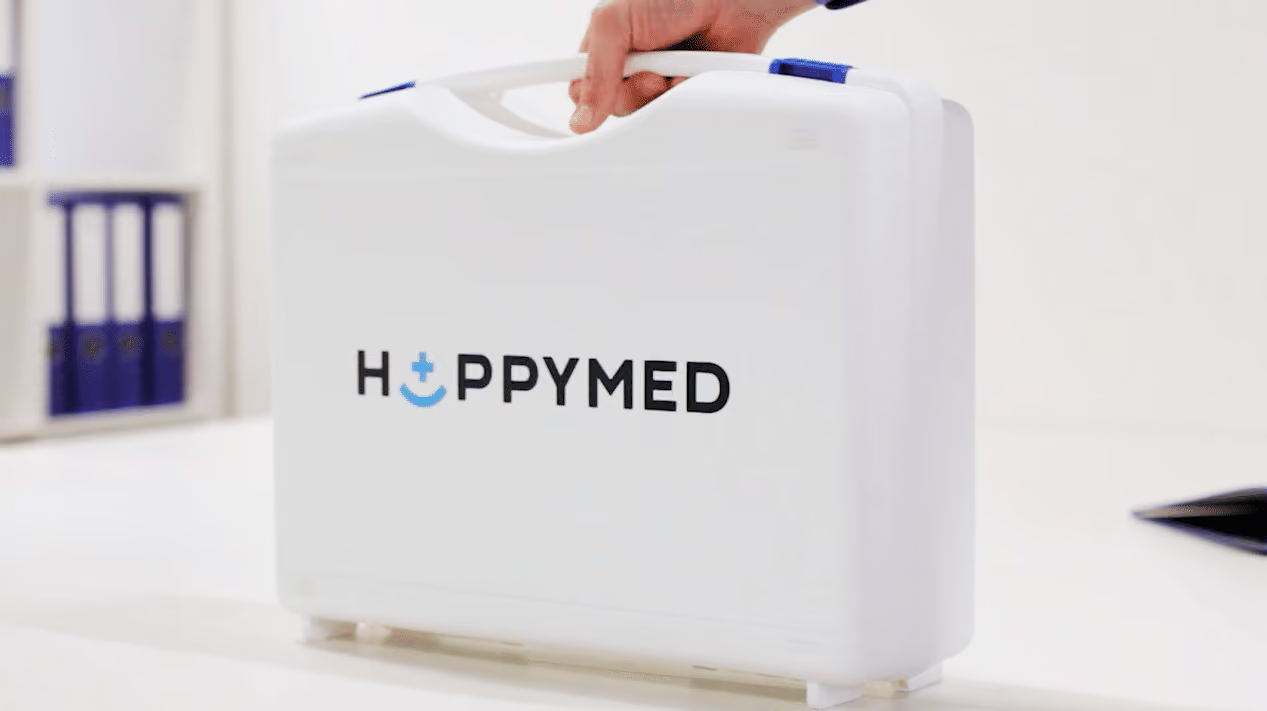
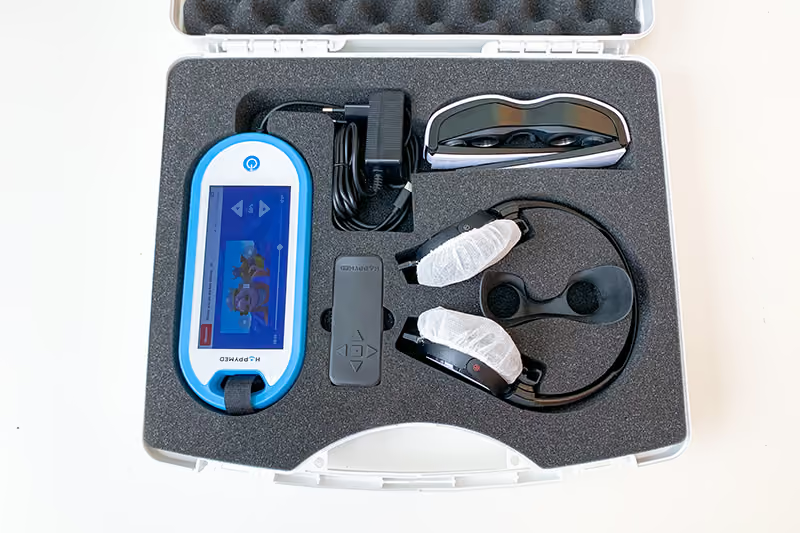

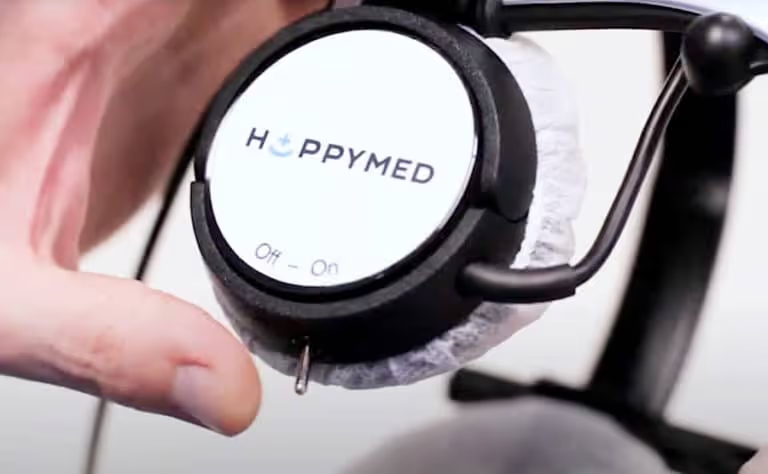
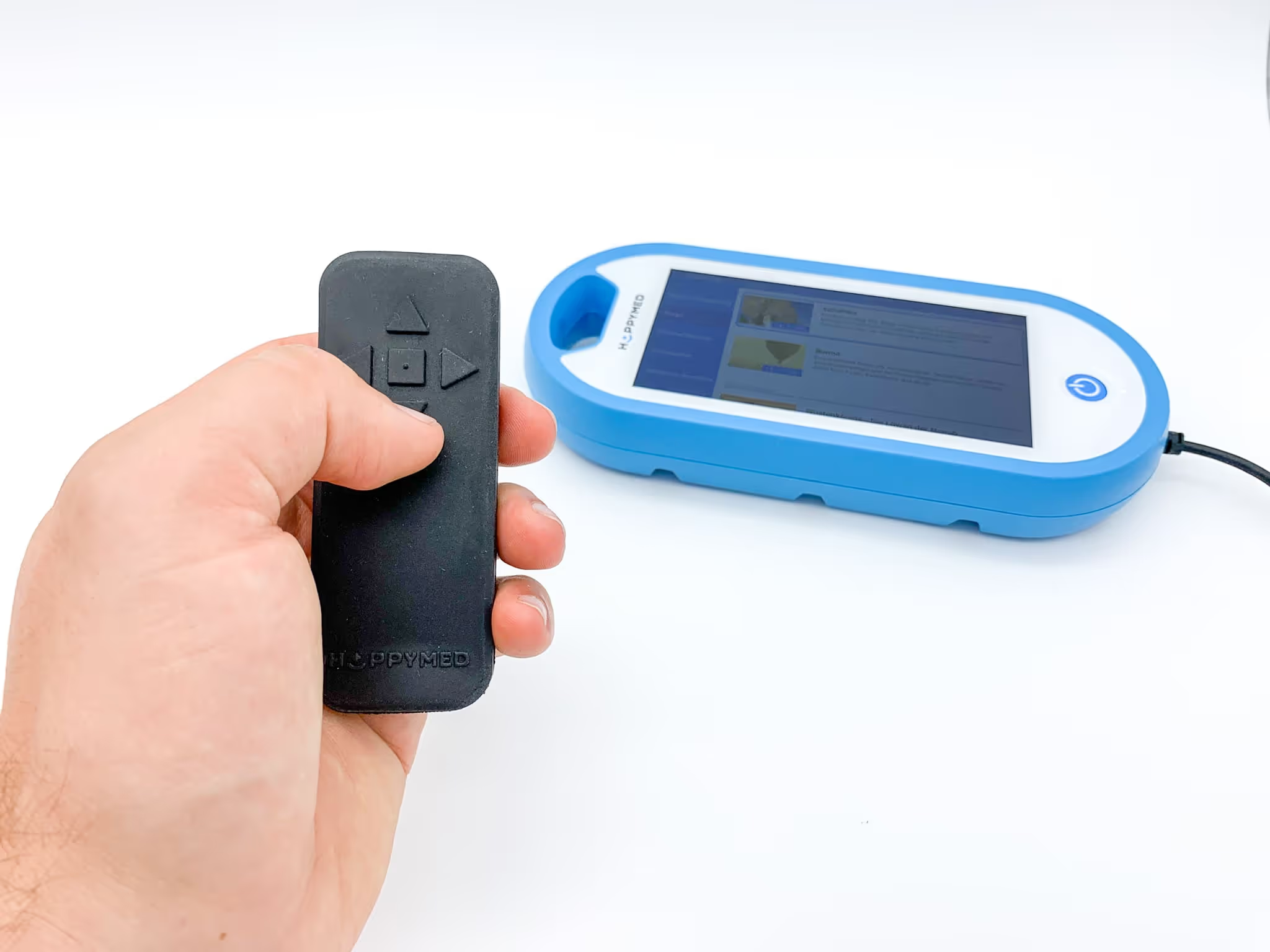
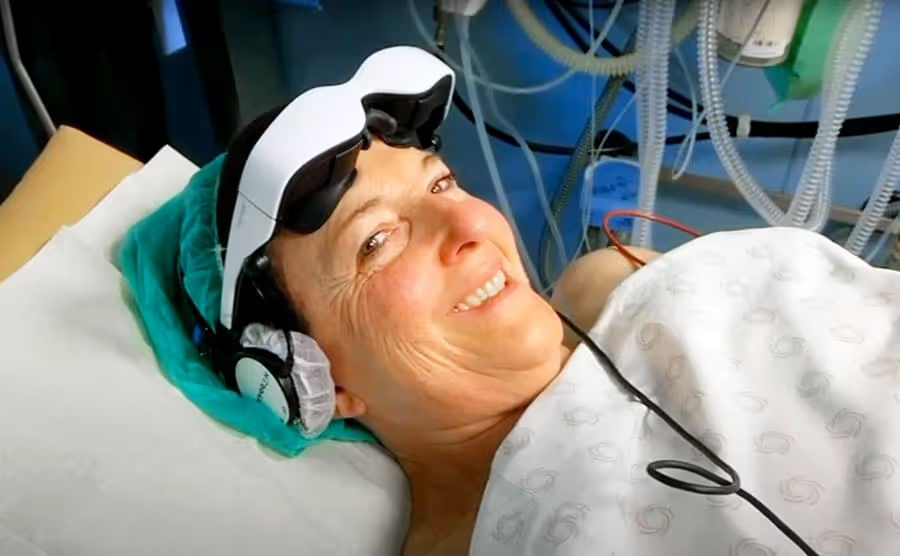
Video glasses, surround headphones and media center in a case. Commercial use of films and music included. Ready for immediate use – no installation required.
All films are stored locally – no Wi-Fi or Internet required. Certified Class I medical device: trouble-free use in the operating room with other devices guaranteed.
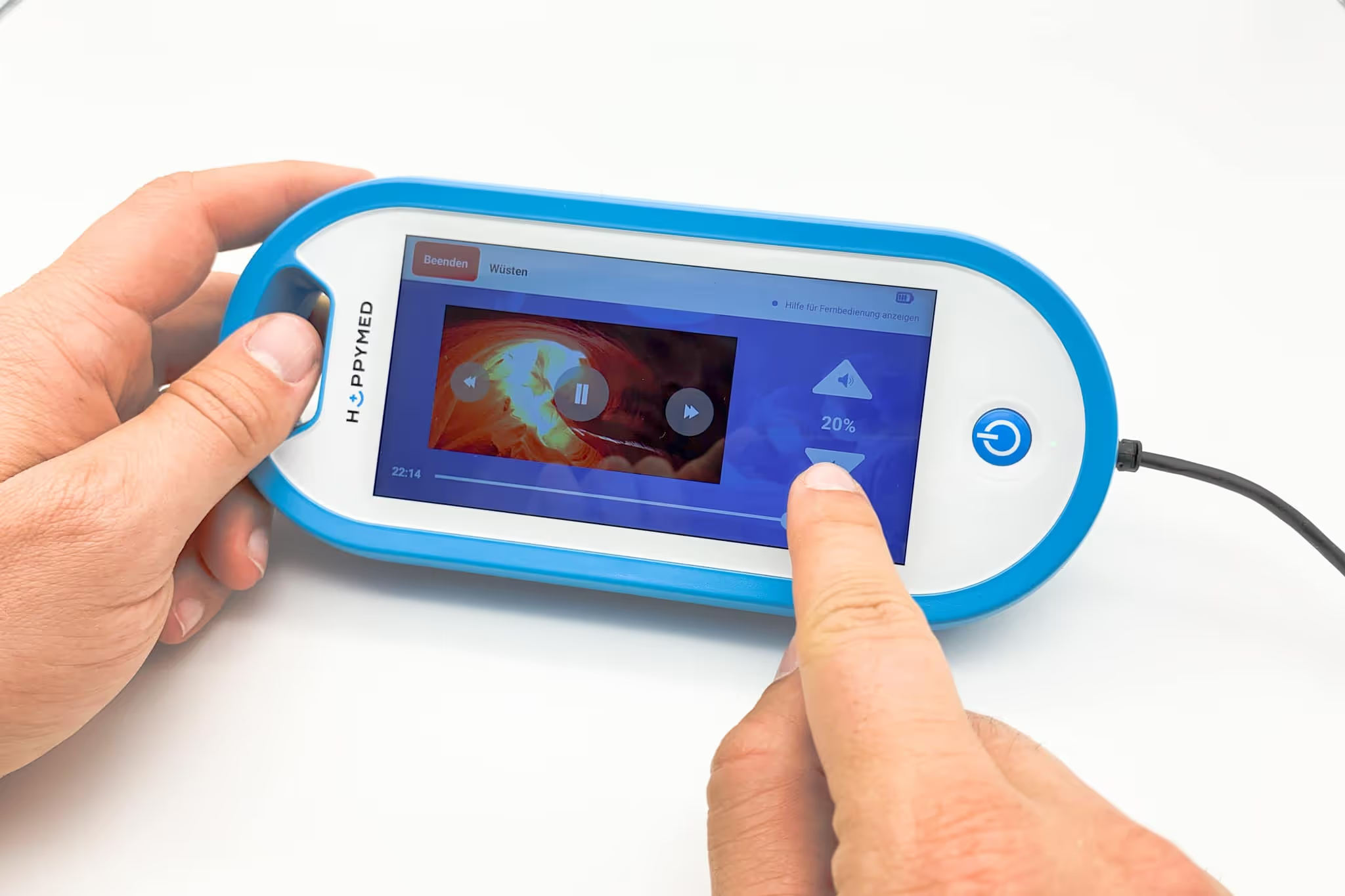
Easy to control via touchscreen or remote control – by staff or patients themselves. Headphones can be controlled individually to allow communication with the patient at any time.
Comedies, Hollywood films, classical concerts, nature documentaries, children’s films and relaxation content – for all ages. Over 80 videos available.
The system can be completely disinfected, the earpads are replaced after each use and a cleaning schedule is an integral part.
Up to 10 hours – suitable for many short and several longer procedures. Monthly rental cost: €249 for one pair of glasses.
Try HappyMed for 14 days for free!
Schedule a test at your hospital. Experience the advantages of HappyMed video glasses at your location, with real patients, during real operations. The glasses are ready for immediate use, no installation is required. Request a free test now
PROVEN
Over 300.000 applications since 2015










HappyMed has been used in over 300 clinics in Germany, Great Britain, France, the Netherlands and Switzerland since 2015. It has now been used over 300,000 times. Further information on our references:
Field reports
Numerous chief anesthetists recommend the use
Patients who use the glasses have a balanced breathing rate, lower blood pressure, and a slower heartbeat.
"You are simply more relaxed and that has a positive effect on the course of the operation. Another positive effect: less medication is required and that also reduces the side effects after the operation. The glasses are also used at the request of the patient when they wake up after a general anesthetic in the recovery room from the operating room, because here too the use of video glasses helps the patient to recover."
Mit diesem Produkt können die Patienten ihre Behandlung entspannter, abgelenkter und stressfreier erleben.
Der Gedanke an eine medizinische Behandlung reicht bei vielen Patientinnen und Patienten aus, um Angst und Stress auszulösen. Der Kontrollverlust führt dazu, dass diese noch viel mehr auf die Umgebung fokussieren und übersensibel auf unterschiedlichste Sinneseindrücke reagieren, wie zum Beispiel das Piepsen der Maschinen. Es kommt vermehrt zur Ausschüttung von Cortisol, wodurch sich der Blutdruck erhöht sowie Puls und Atmung beschleunigen. Mit diesem Produkt können die Patienten ihre Behandlung entspannter, abgelenkter und stressfreier erleben.“

Children are less stressful and hardly need any medication to calm them down.
"I am enthusiastic about the positive effect on our little patients. The children who watch a film on the way to the operating theater are much less stressful and hardly need any medication to calm them down. "
Makes work easier for both doctors and anesthesiologists.
The HappyMed video glasses distract the patient from unpleasant sensations, stimulate the brain with positive impressions and relaxation occurs. Scary sensory impressions are faded out and the patients concentrate so much on the video content that pinpricks or even unpleasant touches can be below the negative limit of perception. This fact makes work easier for both doctors and anesthetists. "

Nine out of ten patients later tell us that they would use them again.
"Many find the glasses very pleasant. They tell us that the glasses can distract them very well. It is probably the case that the brain is very busy with visual and acoustic stimuli - although you can also hear the" trappings " Patients are also approachable, but they are calmer. And nine out of ten tell us later that they would use them again. "

Among other things, we can reduce sedation measures and savings are made.
"We use HappyMed to 90% in the area of regional anesthesia and that in almost all variants (spinal, plexus, etc.). We use the glasses every day for about 5 hours. The patients react very positively to the video glasses. With older patients we need a little more time to explain, but the video glasses are generally well received by younger and older patients. I see the greatest advantage in the great calming down of patients: excited patients benefit from the extensive shielding from ambient noise and the good distraction caused by the films. This enables us to reduce sedation measures, among other things, and savings are made here. In any case, I would recommend HappyMed to my colleagues in anesthesia. "

We support the patient in getting through his operation without fear, without having to resort to sedatives.
"Many of our patients do not want to know exactly what is going on during the operation. However, once the fear spreads, in the past we had no choice but to give a sedative. The video system offers patients not only distraction, but also entertainment. In this way, we support the patient in getting through his operation without fear, without having to resort to sedatives. The first experiences show that our patients like to take advantage of the offer. After the procedure, we record their impressions and opinions using a questionnaire. The feedback so far has been very positive. "
The waiting times are perceived to be shorter, which means that preoperative anxiety can be better controlled.
"The HappyMed glasses caused enthusiasm among the patients, the anesthesiologists and nurses as well as the operative partners. Interventions in local anesthesia or intravenous sedation simply run more smoothly. The waiting times are shorter, which means that preoperative anxiety can be better controlled. In children, a venous access can usually be made more easily with glasses. Children who have to undergo surgery at regular intervals asked in advance whether the glasses are free. "

Our patients are absolutely thrilled!
"We especially offer the glasses to patients who want to distract themselves under a partial anesthetic or who are very excited before the operation. Immersed in the world of vision and sound, they quickly forget that a medical procedure is imminent or that they are currently in the operating room. In addition, the glasses often make it possible to dispense with additional tranquilizers. During an operation under regional anesthesia, many patients fear the unfamiliar surroundings or the noises during the operation. You feel stressed. The HappyMed video system offers the patient optimal visual and acoustic distraction during the operation, optionally with documentaries, Hollywood or children's films. This enables us to enormously reduce the stress level during an operation under regional anesthesia. Our experience shows that our patients come more relaxed and mostly without fear through an operation under regional anesthesia instead of general anesthesia, without having to use other sedatives. "
Our anesthesia team is completely convinced of the benefits of these glasses, and we would recommend them without hesitation!
We have been using your video goggles regularly for about 6 months now. We frequently use them for patients undergoing regional anesthesia who are awake during their surgery. The goggles are a great support in ensuring these patients are not disturbed or anxious, but instead distracted and relaxed. In the hectic day-to-day life of a clinic, there unfortunately isn't always time to stay with an awake patient to reassure them or simply provide support. In these situations, the video goggles are also a huge help. They are lightweight and intuitive to use. The selection of films is extensive, and cleaning them and ensuring the necessary hygiene standards for patient use is simple. Our anesthesia team is absolutely convinced of the benefits of these goggles, and we would recommend them without hesitation.
We have been able to reduce the amount of sleeping pills and sedatives by 50 to 70 percent.
“So far, patients who are afraid of an operation have simply been reassured with medication. However, we have thought about how we can reduce the amount of sleeping pills and sedatives for the benefit of those affected. It is well known that 80 percent of the sensory perception takes place through the eyes and ears. Watching a film during the operation is, so to speak, the optimal distraction. Thanks to their use, we have been able to demonstrably reduce the amount of sleeping pills and sedatives by 50 to 70 percent. The enormous advantage here is that patients have to stay much shorter in the labor-intensive recovery room. If patients need about two to three hours of monitoring after an operation with general anesthesia, the viewers can be brought to the ward with local anesthesia after a good quarter of an hour, as soon as it has been clarified that they are not in pain. This also brings great relief in terms of personnel deployment. The use of glasses is particularly suitable for older patients or people with the onset of dementia, who are considerably more stressful than younger people with medication, and are now in great demand. Avoiding fear and stress during the operation also promotes the healing process. The feedback from patients who have already tried the video glasses has been extremely positive. Those who came back for surgery later ask for it again.
.jpeg)
Great new opportunity!
"The problem with patients is often that they are afraid of this partial anesthetic because they do not want to hear anything about the operation, because they are afraid that the anesthesia will not work properly and say:" I want general anesthesia. " do not know about the risks of general anesthesia. This means that this method of audiovisual care for the patient during partial anesthesia is a great new opportunity. "

We are totally satisfied. The employees have completely accepted the system.
And the patients are incredibly happy about it. They are really well distracted, they are completely relaxed. "

Thanks to the HappyMed video glasses, patient acceptance of regional anesthesia procedures is also increasing.
Almost without exception, additional sedation can be completely dispensed with. Their use is therefore an effective measure to reduce postoperative cognitive deficit states with extended hospital stays - especially in older patients. HappyMed is therefore a win-win for both patient and hospital. "
Less use of sedatives / anesthetics and faster regeneration after the operation!
“The top priority is to relieve our patients of fear and discomfort before a medical procedure. The Happymed video glasses support our individual patient treatment, lead to fewer sedatives / anesthetics and faster regeneration after the operation. "

We were amazed at the immediate positive effects, as well as at the acceptance in the clinics, by employees and patients.
"For us, the patient's well-being comes first - and for this we also like to use innovative and convincing technologies". We were amazed at the immediate positive effects, as well as at the acceptance in the clinics, by employees and patients. Patients breathe more slowly with glasses, their heart beats more calmly, the individual pain sensation decreases and so fewer medicinal sedatives are needed. Overall, the acceptance rate of gentle regional anesthesia instead of general anesthesia is increasing. Doctor and hospital phobias can also be positively influenced in this way. Ultimately, the use of video glasses leads to higher patient satisfaction, as the manufacturer has established. "

Nachhaltig positiv auf die postoperative Phase
“In der praktischen Anwendung der HappyMed Videobrillen freuen wir uns über entspanntere Patienten, in vielen Fällen konnten wir sogar sedierende Medikation einsparen. Das ist ein guter Outcome, mit nachhaltig positiver Auswirkung auf die postoperative Phase.”

AT A GLANCE
In summary: The facts about HappyMed – a certified medical product
Certified medical product class I in the 3rd product generation : trouble-free use in the operating room with other devices possible.
In use since 2015 . Already used over 150,000 times in 127 clinics . Among other things in numerous Helios, Asklepios, Sana clinics and in the Charité University Medicine Berlin .
The new way of positive distraction and reassurance for patients during medical interventions and operations - although addressing them is still possible throughout.
Correlation between positive audiovisual sedation and lower feelings of stress, fear and pain proven by numerous studies and evaluations in leading clinics.
Stunning Cinema Experience: Large selection of feature and nature films as well as documentaries. There is something for everyone - even for children!
Immediate Usability: Compact & mobile system, meaning no installation work!
Intuitive Use: Nursing staff and patients can control the device with the touch screen or remote control.
Easy Cleaning: The system can be completely disinfected, earpads quickly exchanged, and a cleaning plan is available.
Battery life up to 10 hours : suitable for many short but also for several longer interventions
Rental model for device and film licenses: monthly costs of 249 euros for glasses
Business benefits through more regional anesthesia instead of general anesthesia, lower medication costs, relief for the nursing staff and shorter time spent in the recovery room.
Free, non-binding test possible for 14 days!
Try HappyMed for 14 days for free!
Schedule a test at your hospital. Experience the advantages of HappyMed video glasses at your location, with real patients, during real operations. The glasses are ready for immediate use, no installation is required. Request a free test now
Press & TV
Media coverage of procedures
.avif)
.avif)
.avif)
.avif)
PRACTICE & RESEARCH
Recent studies, field reports and evaluations
%20Visual%20(1).png)
Ganz großes Kino: Hollywood-Blockbuster auf der HappyMed Videobrille
Read more »