FAQ – Frequently asked questions about HappyMed?
Use & effect
In which departments and for which interventions is HappyMed used particularly often?
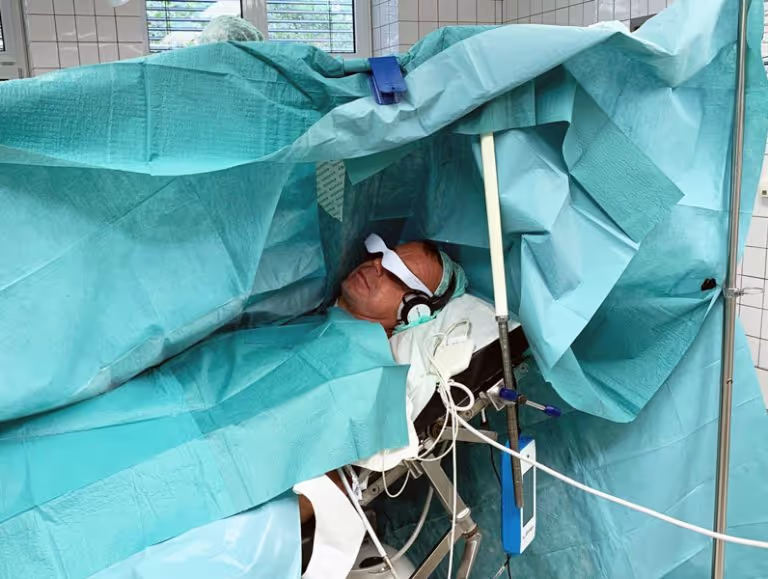
In anesthesia with general anesthesia in the induction room or in the recovery room and with interventions in regional anesthesia also directly in the operating room. In cardiology for percutaneous transluminal coronary angioplasty (PTCA), percutaneous transluminal angioplasty (PTA), transcatheter aortic valve implantation (TAVI) and electrophysiological examination of the heart (EPU). In oncology for radiation therapy, infusion therapy and bone marrow punctures.
> Read more about the possible uses and the advantages in anesthesia
Can the video glasses also be used on children?
In the case of children, it is particularly useful to use it in the pre-operartive room. So you come to the operating room relaxed and only see the transfer from the bed to the operating table before the medical and film programs continue.
Is the effect of audiovisual sedation scientifically proven?
Over 80% of human sensory impressions are perceived through the eyes and ears, which makes audiovisual sedation an extremely effective method for reducing stress and anxiety. HappyMed offers a retreat, even for patients in very psychologically stressful situations, and helps them to come up with positive thoughts. For medical facilities, this results in an alternative to the increased use of sedatives and an effective means of increasing the acceptance rate of regional anesthesia .
Furthermore, evaluations of the video glasses take place in hospitals on an ongoing basis. In June 2021, for example, in the anesthesia department in the Schrobenhausen district hospital, the effect of HappyMed video glasses was examined on 88 patients over a period of 5 months. It was found that the patient’s subjective level of anxiety was significantly reduced through the use of glasses and that sedatives could be partially or completely reduced in over 80% of the interventions .
What is the difference to virtual reality glasses?
Virtual reality glasses are very popular in the entertainment industry, but have some disadvantages in medical use in the OR. When wearing the virtual reality glasses, the patient should be able to move and turn his head; this is the only way to perceive the full environment. In the operating room, however, it does not make sense for patients to move their head back and forth. It has also been found that virtual reality glasses can cause dizziness in some patients. Another disadvantage is the focus on the visual level. Patients are only distracted spatially and not acoustically. So you can perceive the surrounding noises and that in turn makes the calming effect more difficult. For these reasons, we at HappyMed use classic video glasses with headphones.
Application
How well are the glasses being accepted by patients and nursing staff? Are there any numbers?
The program offers either entertainment or relaxation for all ages – for children as well as for seniors. Patients can choose among feature films, comedies, documentaries, nature relaxation, classical concerts, and children’s series.
According to a survey in several clinics of a German chain of clinics (n = 110), 92% of the patients would use HappyMed again. The medical staff enjoy working with HappyMed in more than 80% of the cases. In 45% of the interventions, HappyMed can save on sedatives, painkillers or anesthetics. In 73% of these cases, medication could even be completely dispensed with.
Do you need an Internet or WiFi connection to play the films?
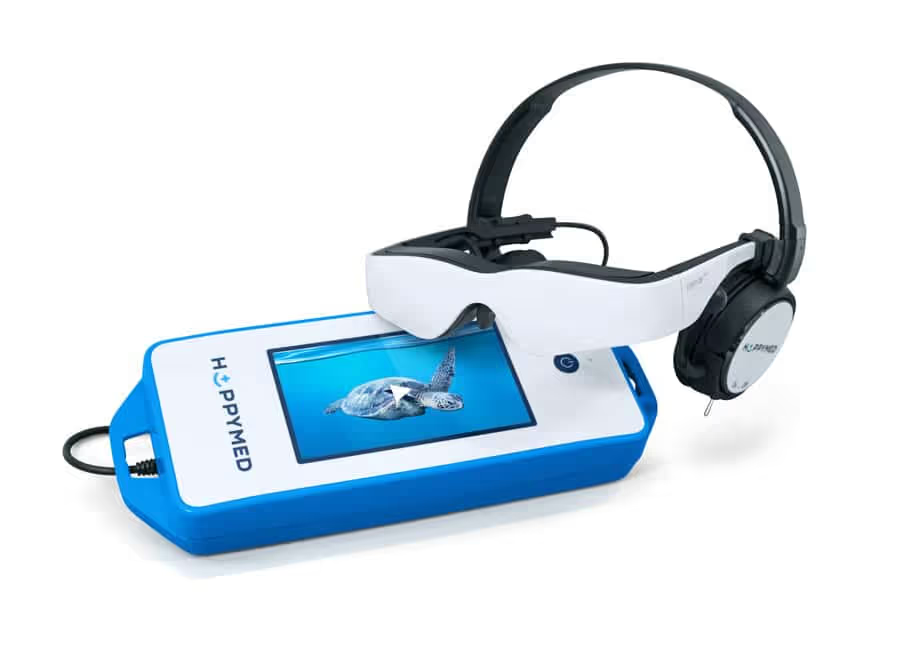
No, all films are stored locallydirectly on the media center. HappyMed can also be used in treatment rooms or the operating theater without W-LAN and without Internet . System and / or updates take place while charging (overnight).
Can you also play your own films on the video glasses?
No, unfortunately not. The HappyMed video system is a closed system with a selection of over 80 films . The program offers entertainment or relaxation for all ages – even for children. Patients can choose among feature films, comedies, documentaries, nature relaxation, classical concerts, and children’s series.
No, unfortunately not. The HappyMed video system is a closed system with a selection of over 80 films . The program offers entertainment or relaxation for all ages – even for children. Patients can choose among feature films, comedies, documentaries, nature relaxation, classical concerts, and children’s series.
Does the application work for patients with poor eyesight or a ventilator?
Yes, for people who wear glasses, the diopters can be set separately for each eye, so that a sharp image is guaranteed.
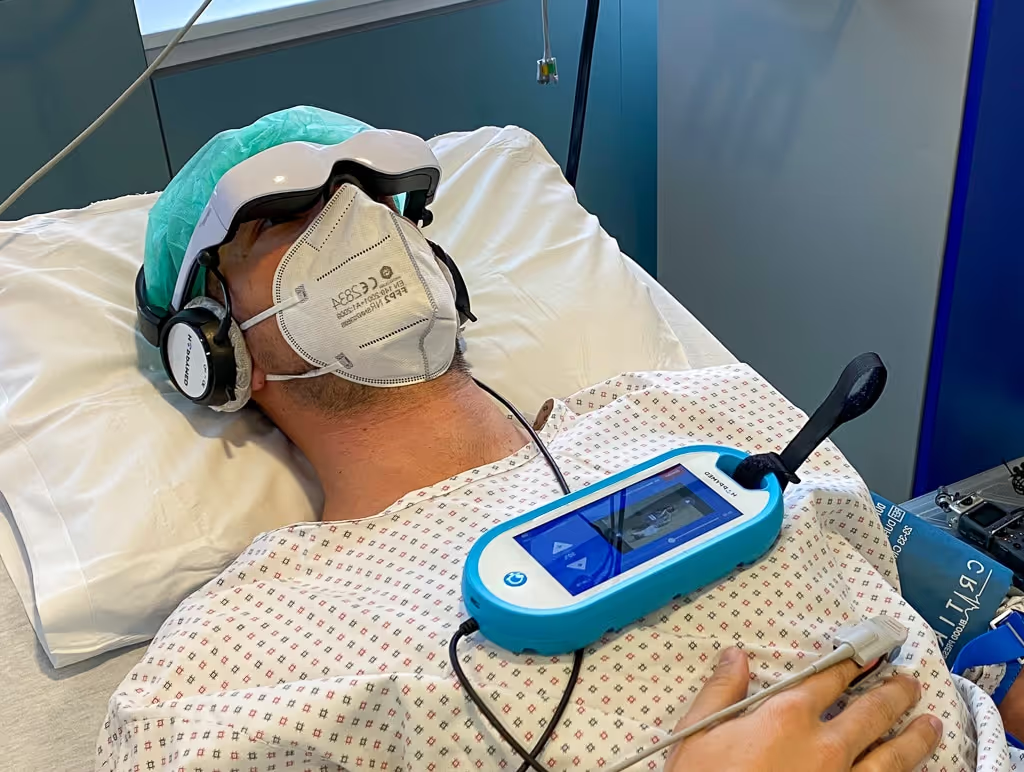
The glasses are ergonomically designed and sit loosely on the nose. Therefore, the glasses can also be used while wearing a ventilator.
Can the patient still hear me? Can you still communicate with the patient?
Yes, the headphones can be deactivated by staff at any time (lever on the outside of the headphones, left and right). This allows you to stay in good contact with the patient.
The patient’s field of vision is only about 70% obscured. This way he is well distracted, but can still look up or down something above or below the glasses. The patient still has the feeling of being in control of the situation and the medical staff has the opportunity to communicate with the wearer if necessary.
How long does the battery last?
The HappyMed battery lasts up to 10 hours . This makes the glasses suitable for daily use – for several successive short interventions and also for longer interventions.
How easy is it to clean / disinfect the device?
The HappyMed video glasses can be completely disinfected thanks to their hygienic surfaces and the disposable headphone covers are interchangeable. A cleaning plan is also available.
How complex is the maintenance of the glasses?
The maintenance of the glasses, in particular the installation of updates in the software area, is carried out remotely . This means that there is no additional effort for the medical technology department .
Are the HappyMed video glasses also MRI-compatible?
Since metal is built into the HappyMed video glasses and MRIs work with a strong magnetic field, it is unfortunately not possible to use the HappyMed video glasses.
In everyday life and in the professional environment, almost all devices and systems generate electrical, magnetic or electromagnetic fields (EMF). The interaction of these fields can lead to interference. For this reason, the HappyMed video glasses cannot be used as part of an MRI examination.
Is it safe to use in the OR? Is HappyMed a certified medical device?
HappyMed is a certified class I medical productand can be used safely in the operating theater.
All films are stored locally directly on the media center. HappyMed can also be used in the operating theater without WiFi and without Internet. System and / or updates take place while charging (overnight).
Purchase
How much do the HappyMed video glasses cost?
The video glasses are exclusively rented. The monthly subscription cost is just €199. That includes the complete system and the film licenses.
Why can't the glasses be bought but only rented?
In a commercial environment it is not possible to purchase films once. Only time-limited usage rights can be negotiated and acquired.
Therefore, there are ongoing license fees for the commercial use of the films and expenses for the management of the related contracts .
HappyMed takes on the full curation of the content up to the management of the usage rights. Hospitals are thus comprehensively protected by law . The contents are also regularly updated and expanded.
In addition to the medical advantages of calmer patients, there are also positive economic effects for the hospital.
How much are the HappyMed video glasses economically viable?
Medical interventions are associated with stress and anxiety . Some patients require higher doses of sedatives and / or analgesics for this reason. Frightened patients also opt for general anesthesia more often , even if, for example, the upcoming procedure would also be possible under regional anesthesia. The sequelae of higher drug doses etc. include the occurrence of postoperative delirium, a longer period of time before extubation or a longer stay in the recovery room. Taken as a whole, this results in an increased amount of care on the part of the anesthetists and nursing staff.
Examples with cost estimates:
- Patients who develop postoperative delirium have to stay an average of 4.2 days longer in the hospital and thus consume additional resources worth around € 1,200.
- Patients who were additionally pharmaceutically sedated before the regional anesthesia must be monitored in the recovery room for 2 hours after the operation. If you rate an hour in the recovery room with costs of approx. 600 €, this results in additional costs of 1,200 € for this one patient.
With the HappyMed video glasses there is a potential for savings through more regional anesthesiainstead of general anesthesia, through less pharmaceutical sedation, through a shorter time to extubation, through a shorter time in the recovery room, through a reduced risk of postoperative delirium and through the relief of the anesthesia and / or nursing staff.
In June 2021, for example, in the anesthesia department in the Schrobenhausen district hospital, the effect of HappyMed video glasses was examined on 88 patients over a period of 5 months . The evaluation not only dealt with the effect of audiovisual sedation on patients, but also included process-oriented topics such as the assessment of economic factors.
It was found here that the patient’s level of anxiety is significantly reduced through the use of glasses and that sedatives could be partially or completely reduced in over 80% of the interventions, according to the assessment of the treatment team.
Finally, it was possible to prove in an economic analysis that the use of HappyMed video glasses is also economical: despite primarily additional costs, the profitability could be proven through positive secondary and tertiary effects . An extrapolation allows the conclusion that the amortization of the video glasses with an isolated consideration of the sequela of “delirium” occurs with an avoidance of this per 113 uses.
The author goes on to say that, from an economic point of view, the marketing effect of video glasses can also create added value. Because other marketing measures are hardly feasible for such low expenditure as for the HappyMed video glasses.
You can find current reports on our press page . Innovative technologies are a magnet for local media and well-known TV & radio stations such as ORF, MDR, Das Erste, ProSieben, SAT.1 or RTL have already reported on HappyMed.
You can read more about the study here or you can download a more extensive whitepaper on savings potential in hospitals here.
How does the free, non-binding 14-day trial (during Corona) work?
You send us an inquiry with your contact details. We will then contact you by phone, discuss a few details and make an appointment for the delivery.
As soon as you have received the video glasses, we will give you a brief introduction either by telephone or online video conference. ( An appointment on site is currently not possible due to the corona situation). The test position is thus carried out completely contactless, online and over the phone.
The HappyMed video glasses are ready for immediate use. No installation or configuration is required. The operation of the system is child’s play and self-explanatory.
During the test, all functions and all media on the video glasses are freely accessible to you. You can use the device to the full and test it for 14 days free of charge . If you have any questions, you can reach us at any time by phone or email.
After the 14-day trial, we will have a short feedback discussion with you about how you experienced the deployment. If you are not convinced, we will have the device picked up at our expense. If you were enthusiastic, we will be happy to make you an offer and, if necessary, you can keep the video glasses from the test version.