Einsatzgebiet
Next Level Patient Experience in der Endoprothetik
Qualitativ hochwertige Patientenversorgung sowie eine hohe Patientensicherheit bei endoprothetischen Eingriffen durch audiovisuelle Sedierung mit einer Videobrille?
Endoprothetik
Fast Track — schnellere Mobilisation durch audiovisuelle Sedierung
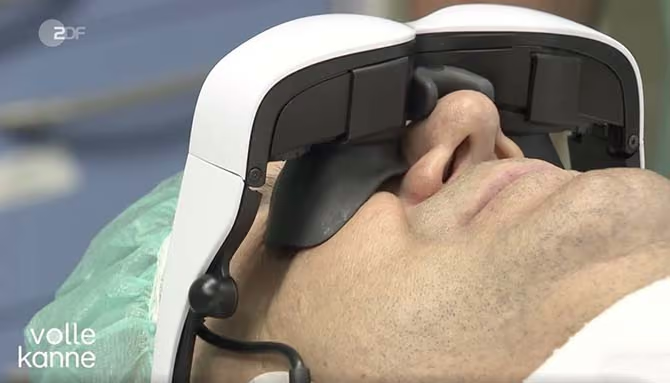
Die Implantation künstlicher Gelenke ist eine der erfolgreichsten Operationen überhaupt. Viele Faktoren sind für den Erfolg einer solchen Operation verantwortlich. Aus der aktuellen wissenschaftlichen Literatur wissen wir, dass auch Angst und Stress des Patienten dabei eine Rolle spielen. So führen diese zu einem erhöhten Einsatz von Sedativa und somit zu einem höheren Risiko für die Entwicklung eines postoperativen Delirs.
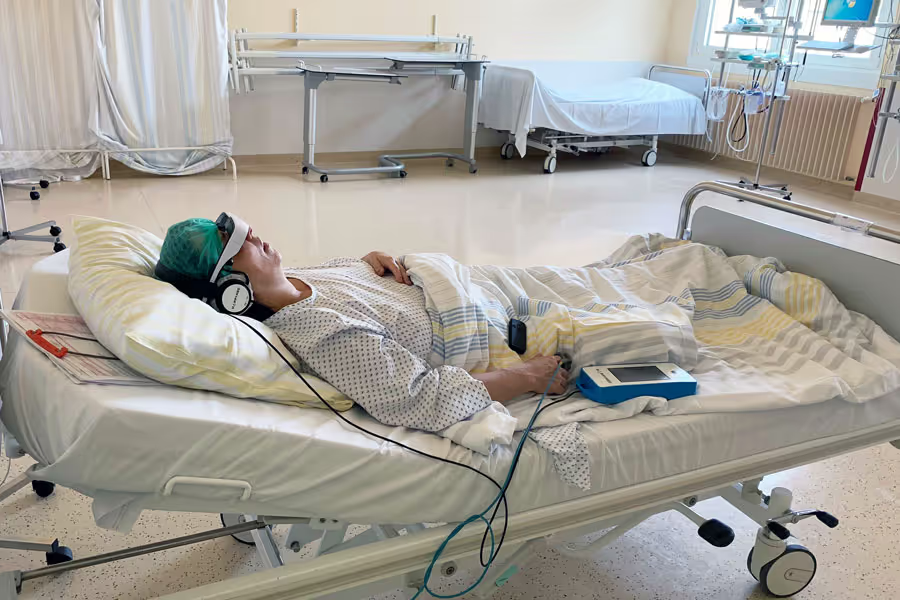
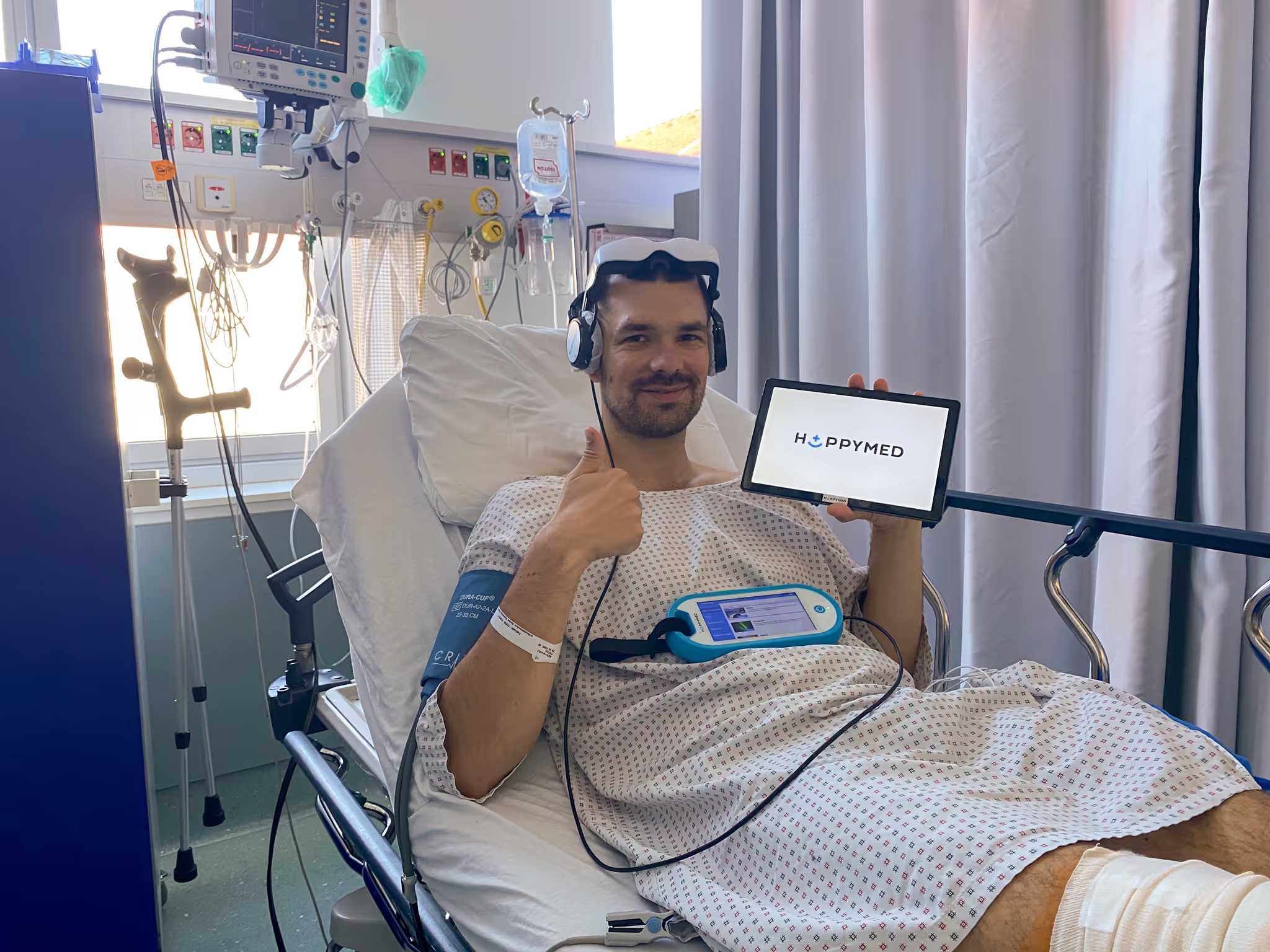
Der Grundgedanke der Endoprothetik liegt darin, den Patienten im Sinne des Fast Track möglichst schnell wieder zu mobilisieren und ins normale Leben zu führen. Oftmals ist die Regionalanästhesie die schonendste Narkoseform – idealerweise kombiniert mit einem Verfahren zur Ablenkung und Stressreduktion, wie z.B. der HappyMed Videobrille, welche bereits in über 300 Kliniken im Einsatz ist.
"Zunächst ist eine gewisse Skepsis da. Wenn man es aber gemacht hat, sind die meisten hellauf begeistert und sagen, dass sie fast nichts mitbekommen haben. Unbeeinflusstes operieren, man merkt keine Anspannung, der Patient ist völlig ruhig und es geht ihm sehr gut. In 90 % der Fälle ist das unsere Erfahrung."
Delirprophylaxe
Patientenzufriedenheit steigern
Beschleunigung von Prozessen & schnellere Mobilisation
Höhere Akzeptanz von Regionalverfahren
Wirkprinzip
Positive Ablenkung durch audiovisuelle Sedierung
Schmerz, Angst und Stress werden dann schlimmer, wenn sich Patienten darauf konzentrieren. Reagiert wird hier oft mit dem Einsatz von mehr pharmazeutischer Sedierung oder der generellen Auswahl einer Allgemeinanästhesie. Das Resultat sind jedoch längere Behandlungszeiten, ein erhöhtes Risiko und höhere Kosten.
Diese Probleme können jetzt anders gelöst werden, indem man Patienten audiovisuell von ihrer Umgebung entkoppelt. Das HappyMed-System mit Videobrille, Touchscreen und ergonomisch angepasstem Surround-Kopfhörer macht es möglich. Angsteinflößende Sinneseindrücke treten in den Hintergrund — das Stress-, Angst- und Schmerzempfinden wird reduziert.
Wissenschaftliche Evidenz
Zahlreiche Studien belegen die Wirkung
Die Wirkung der audiovisuellen Sedierung wird laufend untersucht und folgende positive Effekte konnten bereits nachgewiesen werden:
Höhere Akzeptanzquote von Regionalanästhesie
Geringeres Risiko, weniger Komplikationen und weniger Folgekosten
Weniger Stress & Angst
Geringeres Schmerzempfinden
Weniger Sedativa
Schnellere Erholung
Neue Studie
Hochsignifikant weniger Angst und weniger Sedativa in 80 % aller Eingriffe
In der Anästhesie-Abteilung im Kreiskrankenhaus Schrobenhausen wurde die Wirkung der HappyMed Videobrille in einem Zeitraum von 5 Monaten an 88 Patienten untersucht.
Die 5 wichtigsten Ergebnisse
Das subjektive Angstniveau der Patienten konnte durch den Einsatz der Brille hochsignifikant reduziert werden.
Über 70 % der Patienten fühlten sich während des Eingriffes unter Anwendung der Brille entspannter. Über 75 % der Mitarbeitenden empfanden die Behandlungssituation als entspannter, wenn der Patient die Brille nutzte. Aus Sicht der Mitarbeiter hat über 85 % der Patienten vom Einsatz der Brille profitiert.
In über 80 % der Eingriffe konnten Sedativa nach Einschätzung des Behandlungsteams teilweise oder gar gänzlich reduziert werden.
Bedingt durch die Krankenhausstruktur wurde die Brille in über 80 % der Eingriffe vor allem bei älteren Patienten (>50 Jahre) eingesetzt. Obwohl es sich bei der Brille um ein hoch technisiertes Produkt handelt, zeigte sich, dass auch wenig technikaffine Patienten die Videobrille problemlos nutzen können.
Die Entscheidung zur Einführung einer Videobrille in der Abteilung für Anästhesiologie war aus Mitarbeitersicht vorteilhaft. So wurde ein hoher Grad der Bereicherung der Arbeit und viele Vorteile durch den Einsatz der Videobrille in den Bereichen Patientenkomfort und Ersparnis von sedierenden Medikamenten erwähnt. Letztlich gab es niemanden, der das Produkt nicht weiterempfehlen würde.
Einsatzgebiete
Einsatz bei unterschiedlichen Varianten regionaler Anästhesie
Die Videobrille wird von Jung und Alt gut angenommen, denn in der umfangreichen Medienbibliothek ist für jeden etwas dabei – sogar für Kinder. Trotz der Ablenkung können Ärzte und Pflegepersonal jederzeit mit den Patienten kommunizieren, denn die Kopfhörer sind an den Außenseiten deaktivierbar.
Das Sana-Dreifaltigkeits-Krankenhaus Köln setzt die Brille bei Knie- oder Hüft-TEP Operationen ein. Denn hier ist Regionalanästhesie mit Videobrille eine gute Alternative zur Allgemeinanästhesie. Das Herzzentrum Leipzig nutzt die Vorzüge von HappyMed bei Herzschrittmacher- und Defibrillator-Implantationen und Asklepios setzt die Videobrille bei Operationen in Regionalanästhesie als auch bei Chemotherapien oder Herzkatheteruntersuchungen ein.



Prä- & Postoperativ
Einsatz im Einleitungsraum und Aufwachraum möglich
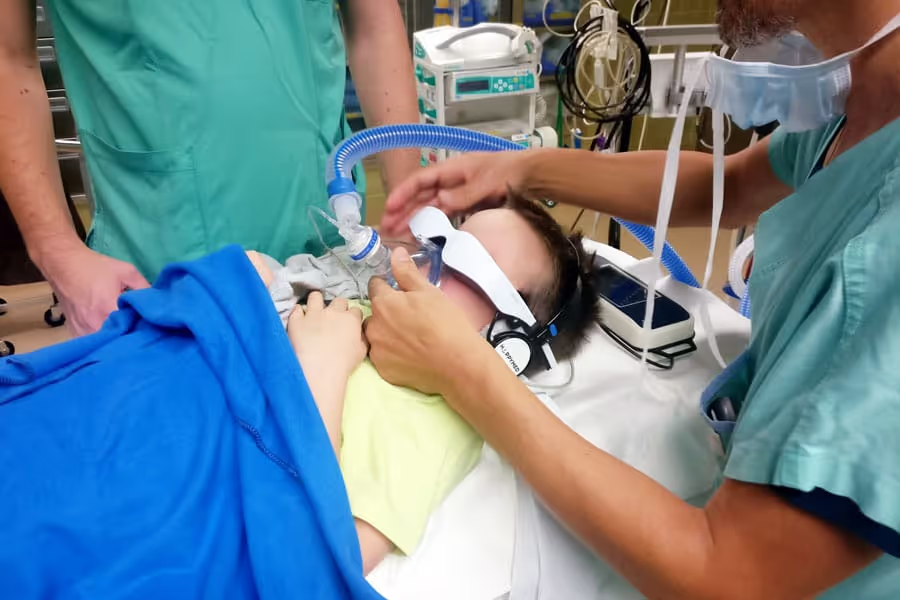
Die HappyMed Videobrille wird in vielen Krankenhäusern vor einer Operation oder vor der Einleitung einer Narkose angewendet. Die Vorteile liegen dabei ebenfalls in der Ablenkung vom Geschehen und damit einer Reduktion des Stress-Levels. Mit der Brille können Wartezeiten gut überbrückt werden, ohne dass der Patient alle seine Gedanken auf den bevorstehenden Eingriff fokussiert.
Der Einsatz der Videobrille entlastet so das Pflegepersonal, denn der Betreuungsaufwand sinkt.Das zertifizierte Medizinprodukt ist kinderleicht vom Personal oder auch vom Patienten selbst bedienbar und wird ausgesprochen gut angenommen. Anfang 2017 wurde an drei Standorten der Sana-Kliniken eine systematische Evaluation mit 110 HappyMed-Patienten durchgeführt, die unter Regional- oder Vollnarkose (Nutzung der Brille im Aufwachraum) operiert wurden. 92 Prozent der Patienten waren mit den Effekten der Videobrille zufrieden und würden diese bei einem erneuten Eingriff wieder nutzen oder sie anderen Patienten empfehlen.
Eine Studie am Franziskus-Hospital Harderberg ergab eine signifikant höhere Akzeptanzquote von Regionalverfahren, wenn die Eingriffe in Kombination mit der HappyMed Videobrille durchgeführt werden. Das größte Potential liegt hier bei ambulanten und orthopädischen Eingriffen, welche in der Regel gut mittels regionaler Anästhesie erfolgen können.


Im Detail
HappyMed im Detail: Wie funktioniert die Videobrille genau?
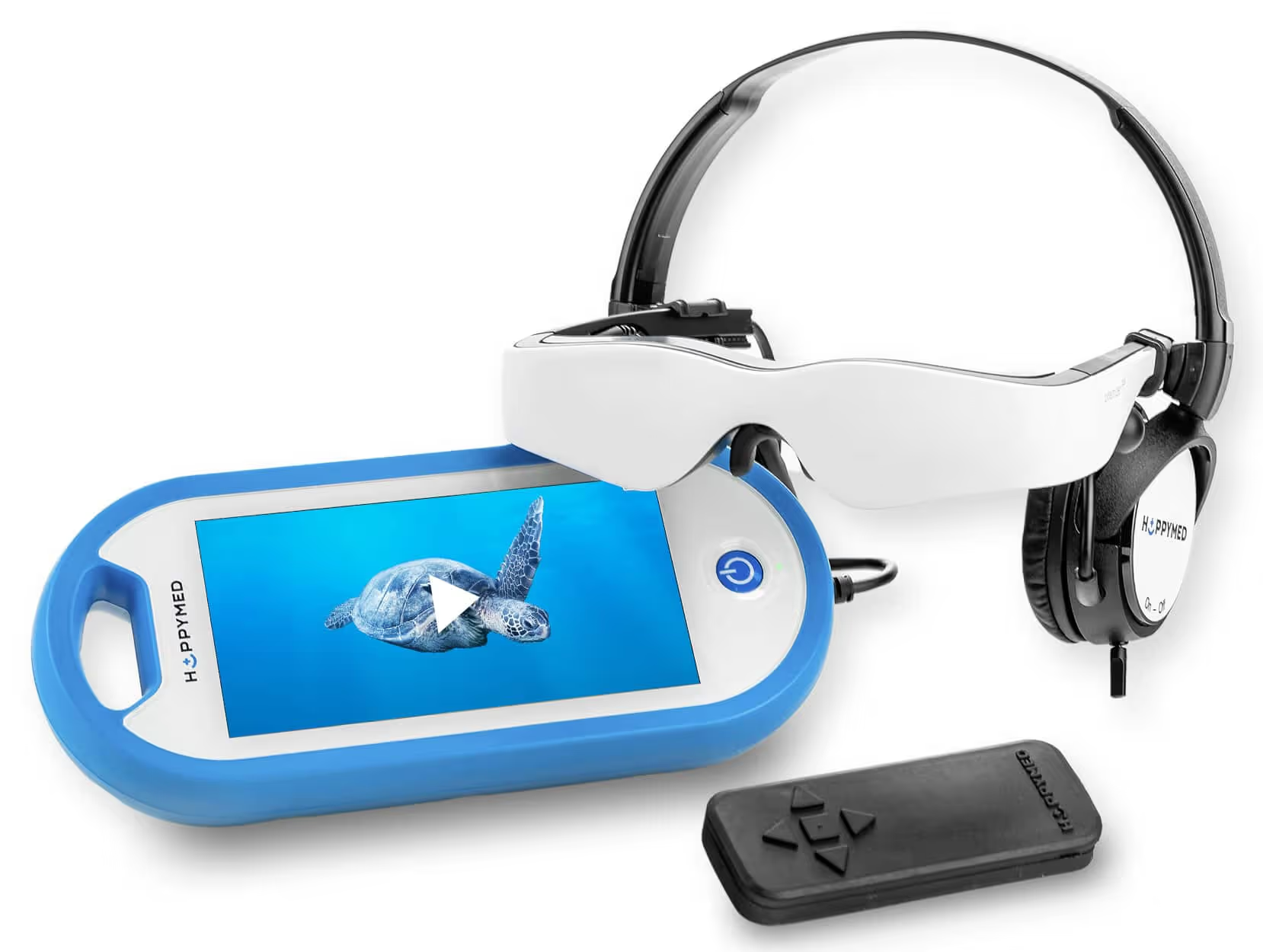
Videobrille, Kopfhörer & Mediencenter — kompakt und sofort einsatzbereit
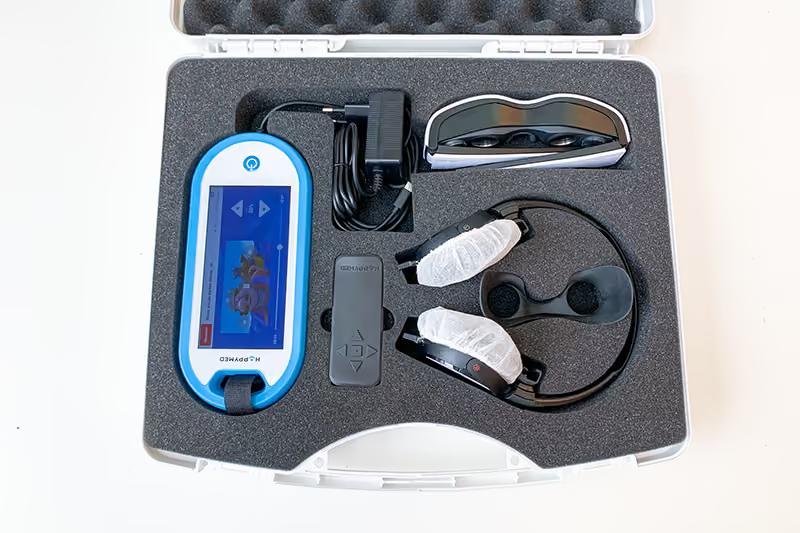
Einfacher Transport zwischen unterschiedlichen OPs oder dem Aufwachraum

Auch für Brillenträger — garantiert ein scharfes Bild
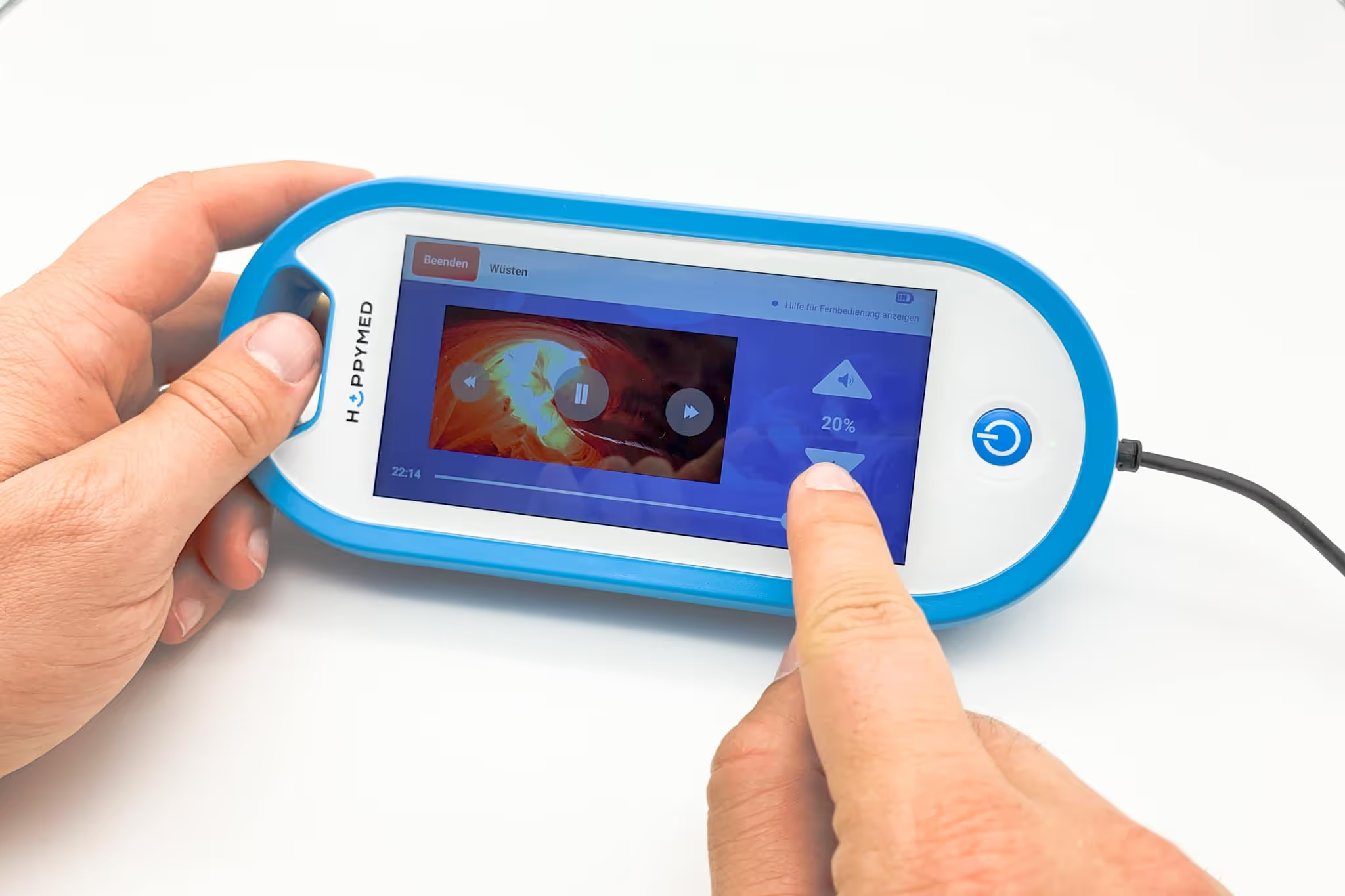
Alle Inhalte lokal gespeichert — kein WLAN nötig
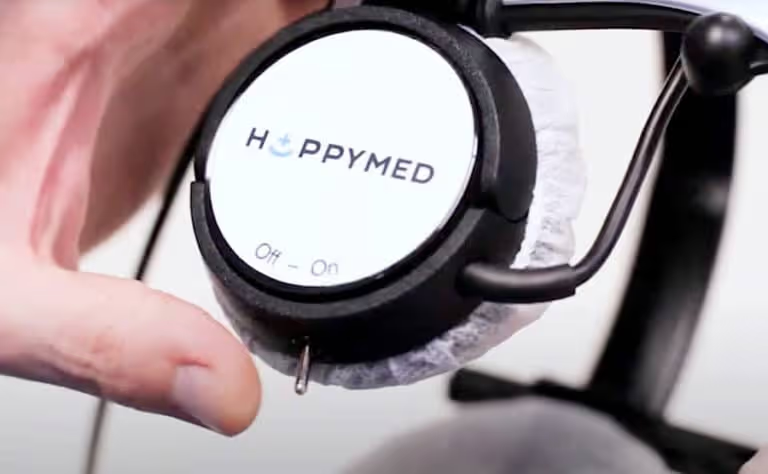
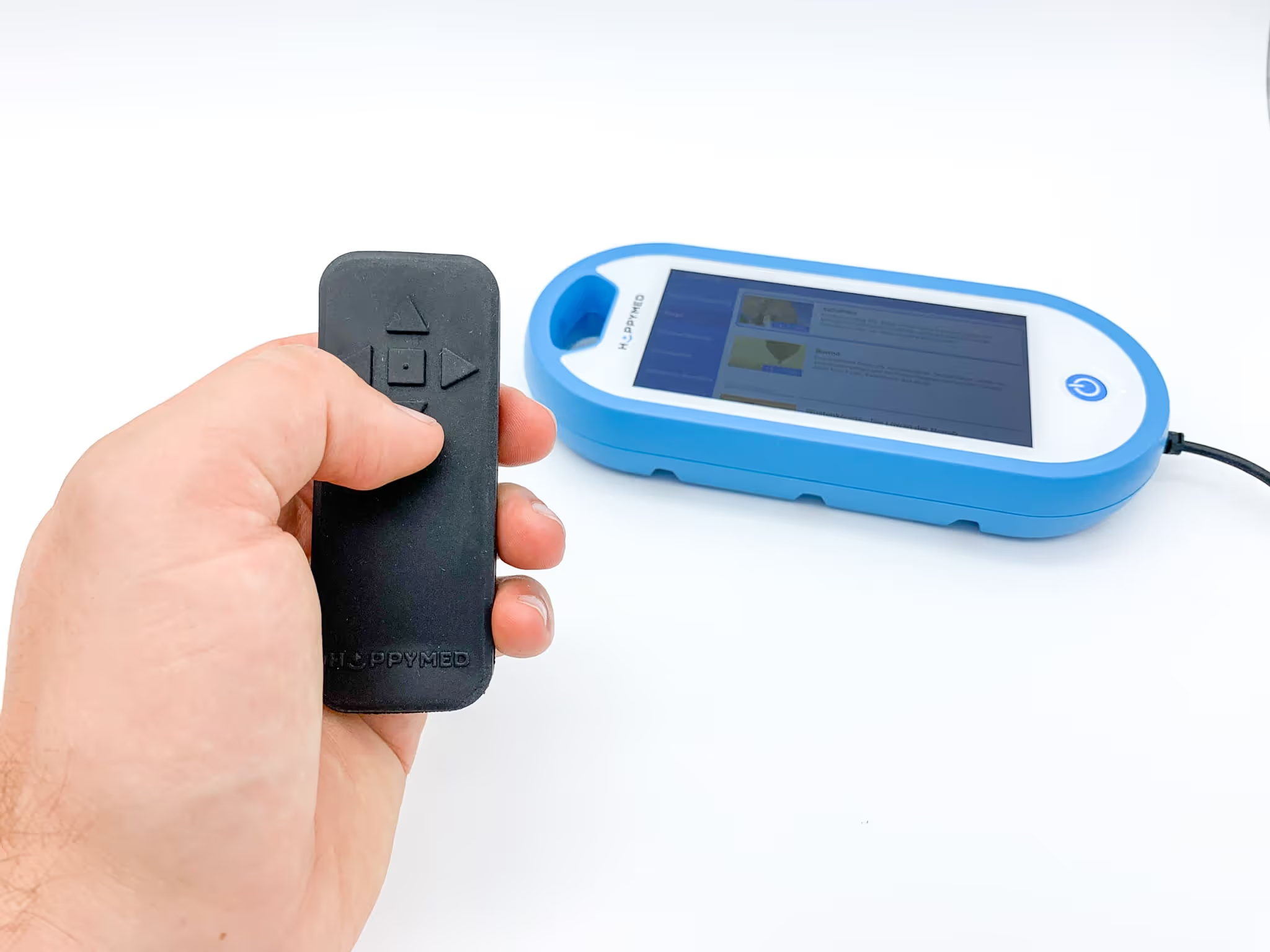
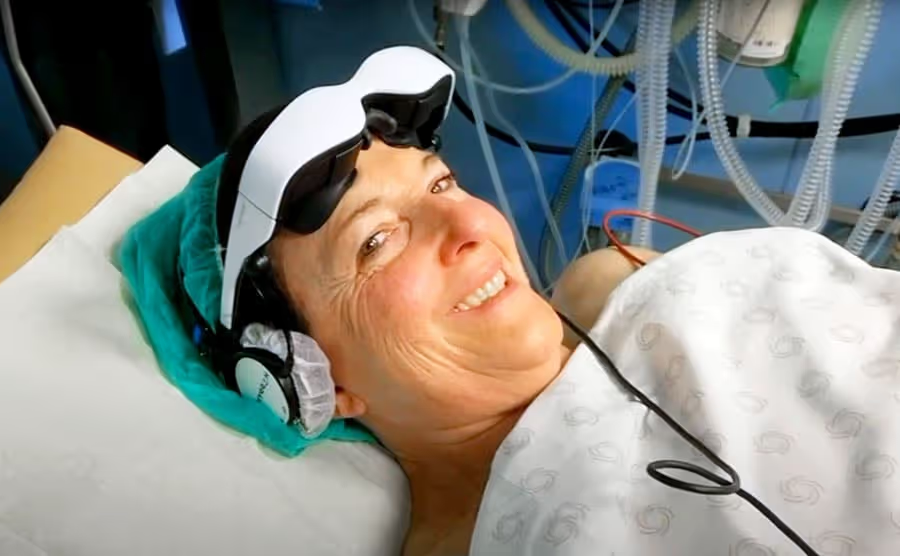
Videobrille, Surround-Kopfhörer, Mediencenter im Koffer. Gewerbliche Nutzung der Filme und Musik inkludiert. Sofort in Betrieb nehmen — keine Installation nötig.
Alle Filme lokal gespeichert — kein WLAN oder Internet nötig. Zertifiziertes Medizinprodukt Klasse I: störungsfreier Einsatz im OP mit anderen Geräten garantiert.
Kinderleicht per Touchscreen oder Fernbedienung steuerbar — durch Personal oder den Patienten selbst. Kopfhörer einzeln ansteuerbar für Kommunikation.
Komödien, Hollywoodfilme, klassische Konzerte, Natur-Dokumentationen, Kinderfilme, Entspannungsinhalte — für jedes Alter. Über 80 Videos verfügbar.
System komplett desinfizierbar. Earpads werden nach jeder Anwendung erneuert. Reinigungsplan ist fixer Bestandteil.
Bis zu 10 Stunden — für viele kurze und mehrere längere Eingriffe geeignet. Monatliche Mietkosten: 199 € für eine Brille.
HappyMed 14 Tage kostenlos testen!
Vereinbaren Sie einen Test in Ihrem Krankenhaus. Erleben Sie die Vorteile der HappyMed-Videobrille direkt bei Ihnen vor Ort, mit echten Patienten, während echten Eingriffen. Die Brille ist sofort einsatzbereit, es bedarf keiner Installation. Jetzt kostenlosen Test anfragen
BEWÄHRT
Bereits über 300.000 Anwendungen seit 2015










HappyMed wird bereits in über 300 Kliniken in Deutschland, Großbritannien, Frankreich, den Niederlanden und der Schweiz eingesetzt. Inzwischen wurde sie über 300.000 Mal angewendet. Weiterführende Informationen zu unseren Referenzen:
Erfahrungsberichte
Chefärzte, Ärztliche Direktoren & Vorstände über HappyMed
Patients who use the glasses have a balanced breathing rate, lower blood pressure, and a slower heartbeat.
"You are simply more relaxed and that has a positive effect on the course of the operation. Another positive effect: less medication is required and that also reduces the side effects after the operation. The glasses are also used at the request of the patient when they wake up after a general anesthetic in the recovery room from the operating room, because here too the use of video glasses helps the patient to recover."
Mit diesem Produkt können die Patienten ihre Behandlung entspannter, abgelenkter und stressfreier erleben.
Der Gedanke an eine medizinische Behandlung reicht bei vielen Patientinnen und Patienten aus, um Angst und Stress auszulösen. Der Kontrollverlust führt dazu, dass diese noch viel mehr auf die Umgebung fokussieren und übersensibel auf unterschiedlichste Sinneseindrücke reagieren, wie zum Beispiel das Piepsen der Maschinen. Es kommt vermehrt zur Ausschüttung von Cortisol, wodurch sich der Blutdruck erhöht sowie Puls und Atmung beschleunigen. Mit diesem Produkt können die Patienten ihre Behandlung entspannter, abgelenkter und stressfreier erleben.“

Children are less stressful and hardly need any medication to calm them down.
"I am enthusiastic about the positive effect on our little patients. The children who watch a film on the way to the operating theater are much less stressful and hardly need any medication to calm them down. "
Makes work easier for both doctors and anesthesiologists.
The HappyMed video glasses distract the patient from unpleasant sensations, stimulate the brain with positive impressions and relaxation occurs. Scary sensory impressions are faded out and the patients concentrate so much on the video content that pinpricks or even unpleasant touches can be below the negative limit of perception. This fact makes work easier for both doctors and anesthetists. "

Nine out of ten patients later tell us that they would use them again.
"Many find the glasses very pleasant. They tell us that the glasses can distract them very well. It is probably the case that the brain is very busy with visual and acoustic stimuli - although you can also hear the" trappings " Patients are also approachable, but they are calmer. And nine out of ten tell us later that they would use them again. "

Among other things, we can reduce sedation measures and savings are made.
"We use HappyMed to 90% in the area of regional anesthesia and that in almost all variants (spinal, plexus, etc.). We use the glasses every day for about 5 hours. The patients react very positively to the video glasses. With older patients we need a little more time to explain, but the video glasses are generally well received by younger and older patients. I see the greatest advantage in the great calming down of patients: excited patients benefit from the extensive shielding from ambient noise and the good distraction caused by the films. This enables us to reduce sedation measures, among other things, and savings are made here. In any case, I would recommend HappyMed to my colleagues in anesthesia. "

We support the patient in getting through his operation without fear, without having to resort to sedatives.
"Many of our patients do not want to know exactly what is going on during the operation. However, once the fear spreads, in the past we had no choice but to give a sedative. The video system offers patients not only distraction, but also entertainment. In this way, we support the patient in getting through his operation without fear, without having to resort to sedatives. The first experiences show that our patients like to take advantage of the offer. After the procedure, we record their impressions and opinions using a questionnaire. The feedback so far has been very positive. "
The waiting times are perceived to be shorter, which means that preoperative anxiety can be better controlled.
"The HappyMed glasses caused enthusiasm among the patients, the anesthesiologists and nurses as well as the operative partners. Interventions in local anesthesia or intravenous sedation simply run more smoothly. The waiting times are shorter, which means that preoperative anxiety can be better controlled. In children, a venous access can usually be made more easily with glasses. Children who have to undergo surgery at regular intervals asked in advance whether the glasses are free. "

Our patients are absolutely thrilled!
"We especially offer the glasses to patients who want to distract themselves under a partial anesthetic or who are very excited before the operation. Immersed in the world of vision and sound, they quickly forget that a medical procedure is imminent or that they are currently in the operating room. In addition, the glasses often make it possible to dispense with additional tranquilizers. During an operation under regional anesthesia, many patients fear the unfamiliar surroundings or the noises during the operation. You feel stressed. The HappyMed video system offers the patient optimal visual and acoustic distraction during the operation, optionally with documentaries, Hollywood or children's films. This enables us to enormously reduce the stress level during an operation under regional anesthesia. Our experience shows that our patients come more relaxed and mostly without fear through an operation under regional anesthesia instead of general anesthesia, without having to use other sedatives. "
Our anesthesia team is completely convinced of the benefits of these glasses, and we would recommend them without hesitation!
We have been using your video goggles regularly for about 6 months now. We frequently use them for patients undergoing regional anesthesia who are awake during their surgery. The goggles are a great support in ensuring these patients are not disturbed or anxious, but instead distracted and relaxed. In the hectic day-to-day life of a clinic, there unfortunately isn't always time to stay with an awake patient to reassure them or simply provide support. In these situations, the video goggles are also a huge help. They are lightweight and intuitive to use. The selection of films is extensive, and cleaning them and ensuring the necessary hygiene standards for patient use is simple. Our anesthesia team is absolutely convinced of the benefits of these goggles, and we would recommend them without hesitation.
We have been able to reduce the amount of sleeping pills and sedatives by 50 to 70 percent.
“So far, patients who are afraid of an operation have simply been reassured with medication. However, we have thought about how we can reduce the amount of sleeping pills and sedatives for the benefit of those affected. It is well known that 80 percent of the sensory perception takes place through the eyes and ears. Watching a film during the operation is, so to speak, the optimal distraction. Thanks to their use, we have been able to demonstrably reduce the amount of sleeping pills and sedatives by 50 to 70 percent. The enormous advantage here is that patients have to stay much shorter in the labor-intensive recovery room. If patients need about two to three hours of monitoring after an operation with general anesthesia, the viewers can be brought to the ward with local anesthesia after a good quarter of an hour, as soon as it has been clarified that they are not in pain. This also brings great relief in terms of personnel deployment. The use of glasses is particularly suitable for older patients or people with the onset of dementia, who are considerably more stressful than younger people with medication, and are now in great demand. Avoiding fear and stress during the operation also promotes the healing process. The feedback from patients who have already tried the video glasses has been extremely positive. Those who came back for surgery later ask for it again.
.jpeg)
Great new opportunity!
"The problem with patients is often that they are afraid of this partial anesthetic because they do not want to hear anything about the operation, because they are afraid that the anesthesia will not work properly and say:" I want general anesthesia. " do not know about the risks of general anesthesia. This means that this method of audiovisual care for the patient during partial anesthesia is a great new opportunity. "

We are totally satisfied. The employees have completely accepted the system.
And the patients are incredibly happy about it. They are really well distracted, they are completely relaxed. "

Thanks to the HappyMed video glasses, patient acceptance of regional anesthesia procedures is also increasing.
Almost without exception, additional sedation can be completely dispensed with. Their use is therefore an effective measure to reduce postoperative cognitive deficit states with extended hospital stays - especially in older patients. HappyMed is therefore a win-win for both patient and hospital. "
Less use of sedatives / anesthetics and faster regeneration after the operation!
“The top priority is to relieve our patients of fear and discomfort before a medical procedure. The Happymed video glasses support our individual patient treatment, lead to fewer sedatives / anesthetics and faster regeneration after the operation. "

We were amazed at the immediate positive effects, as well as at the acceptance in the clinics, by employees and patients.
"For us, the patient's well-being comes first - and for this we also like to use innovative and convincing technologies". We were amazed at the immediate positive effects, as well as at the acceptance in the clinics, by employees and patients. Patients breathe more slowly with glasses, their heart beats more calmly, the individual pain sensation decreases and so fewer medicinal sedatives are needed. Overall, the acceptance rate of gentle regional anesthesia instead of general anesthesia is increasing. Doctor and hospital phobias can also be positively influenced in this way. Ultimately, the use of video glasses leads to higher patient satisfaction, as the manufacturer has established. "

Nachhaltig positiv auf die postoperative Phase
“In der praktischen Anwendung der HappyMed Videobrillen freuen wir uns über entspanntere Patienten, in vielen Fällen konnten wir sogar sedierende Medikation einsparen. Das ist ein guter Outcome, mit nachhaltig positiver Auswirkung auf die postoperative Phase.”

Auf einen Blick
Zusammengefasst: Die Fakten zu HappyMed
Zertifiziertes Medizinprodukt Klasse I in der 3. Produktgeneration: störungsfreier Einsatz im OP mit anderen Geräten möglich.
Seit 2015 im Einsatz. Bereits über 300.000 Mal angewendet in über 300 Klinken. Unter anderem in zahlreichen Helios-, Asklepios-, Sana-Kliniken und in der Charité-Universitätsmedizin Berlin.
Der neue Weg zur positiven Ablenkung und Beruhigung für Patienten bei medizinischen Eingriffen und Operationen - wobei die Ansprache trotzdem noch durchgängig möglich.
Zusammenhang zwischen positiver audiovisueller Sedierung und geringerem Stress-, Angst- und Schmerzempfinden durch zahlreiche Studien und Evaluierungen in führenden Kliniken nachgewiesen.
Begeisterndes Kinoerlebnis: Große Auswahl an Spiel- und Naturfilmen sowie Dokumentationen. Damit ist für jeden etwas dabei – auch für Kinder!
Sofort einsatzbereit: kompaktes & mobiles System, keine Installationsarbeit!
Kinderleichte Bedienung: Das Pflegepersonal aber auch der Patient können das Gerät mit Touch-Display oder mit Fernbedienung steuern.
Einfache Reinigung: System komplett desinfizierbar, Earpads auswechselbar, Reinigungsplan vorhanden.
Zertifiziertes Medizinprodukt Klasse I in der 3. Produktgeneration: störungsfreier Einsatz im OP mit anderen Geräten möglich.
Mietmodell für Gerät und Filmlizenzen: Monatliche Kosten von 199 Euro für eine Brille
Betriebswirtschaftlicher Nutzen durch mehr Regionalanästhesien statt Vollnarkosen, sinkende Medikationskosten, Entlastung des Pflegepersonals und kürzere Aufenthaltszeit im Aufwachraum. > Rentabilitätsrechner
Kostenloser, unverbindlicher Test für 14 Tage möglich!
HappyMed 14 Tage kostenlos testen!
Vereinbaren Sie einen Test in Ihrem Krankenhaus. Erleben Sie die Vorteile der HappyMed-Videobrille direkt bei Ihnen vor Ort, mit echten Patienten, während echten Eingriffen. Die Brille ist sofort einsatzbereit, es bedarf keiner Installation. Jetzt kostenlosen Test anfragen
Presse & TV
Medienberichte von Eingriffen
.avif)
.avif)
.avif)
.avif)
Praxis & Forschung
Neueste Studien, Erfahrungsberichte und Evaluierungen
%20Visual%20(1).png)
Ganz großes Kino: Hollywood-Blockbuster auf der HappyMed Videobrille
WEITERLESEN »