
Fear of hip surgery: distracted and relaxed as a patient with the HappyMed Video Glasses
How you can prepare for hip surgery, how high the risk of dying under general anaesthesia is, and why you can look forward to watching Mr. Bean during the surgery.
How risky is hip surgery?
Hip surgery, especially the insertion of a total hip replacement (THR), is not free of risks despite modern medical procedures. Many patients are worried and wonder how dangerous such a surgery really is. Possible complications include infections, bleeding, blood clots or nerve damage, which can occur after the procedure.
Although the risk of a fatal outcome due to general anaesthesia during hip surgery is extremely low, the procedure can involve additional challenges for older people or those in poor health. According to the German Federal Association for Outpatient Surgery (Bundesverband für Ambulantes Operieren), general anaesthesia rarely leads to serious complications, but side effects such as nausea, circulatory problems or confusion can occur after anaesthesia.

Reduce the fear of hip surgery by knowing roughly what happens
On the day of hip surgery, the procedure usually begins with thorough preparation, during which the patient is informed once again about the process and the anaesthesia options. After a final check by the medical team, the patient is taken to the operating area and connected to the anaesthesia. During the surgery, the affected area of the body is sterilised and covered to minimise the risk of infection. The surgeon removes the damaged hip joint and replaces it with the artificial prosthesis.
The duration of the surgery varies, but it usually takes between one and two hours. Throughout, the team continuously monitors the patient’s vital signs. Once the surgery is complete, the patient is taken to the recovery room, where they slowly recover from the anaesthesia.

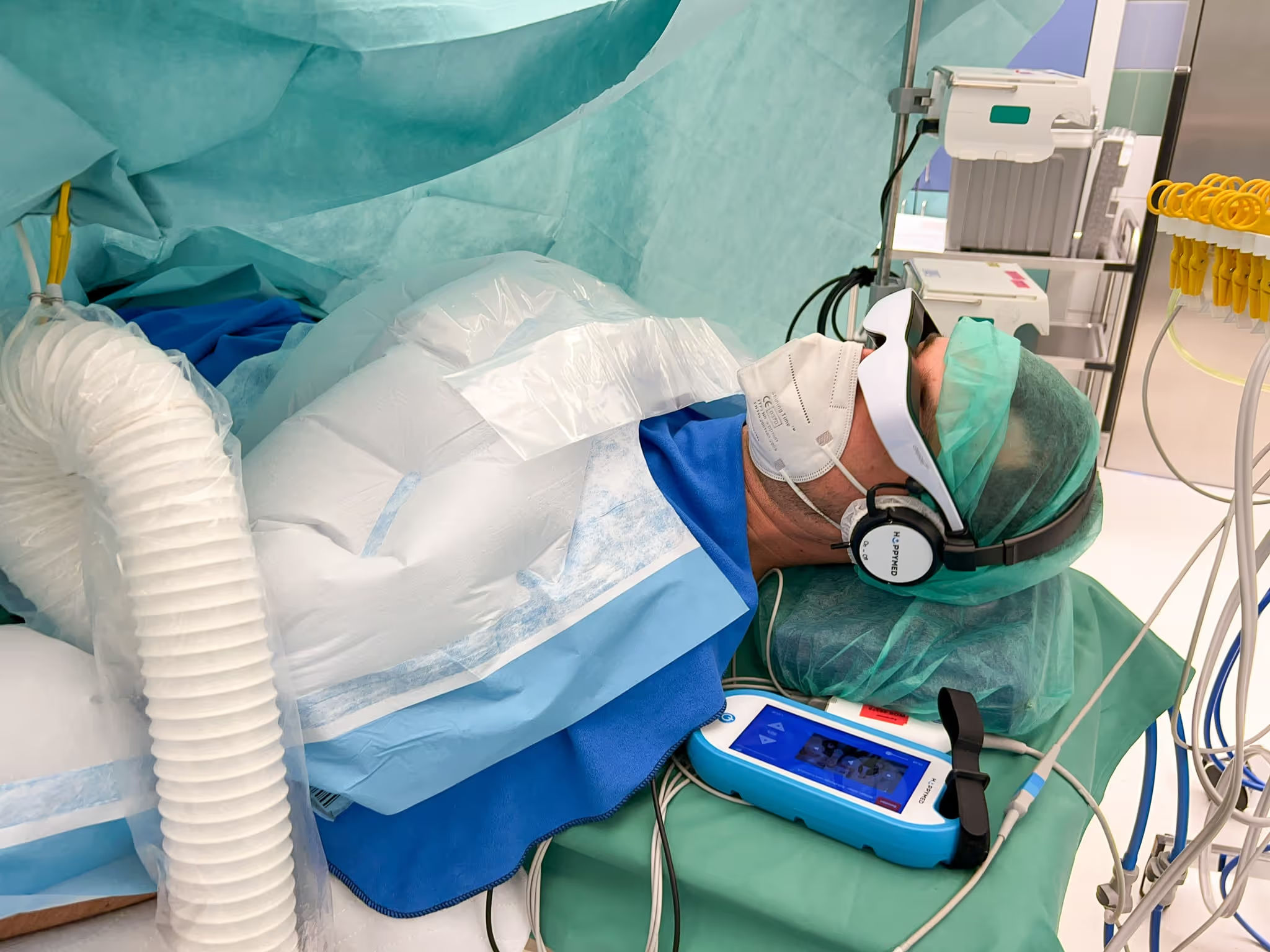
Our Managing Director Philipp Albrecht testing it himself during his knee surgery under regional anaesthesia
Experiences with hip surgery under spinal anaesthesia
In hip surgery, spinal anaesthesia can be used instead of general anaesthesia. It numbs the lower part of the body while the patient stays awake. This method is particularly suitable for older people or those with pre-existing health conditions, as it puts less strain on the cardiovascular system.
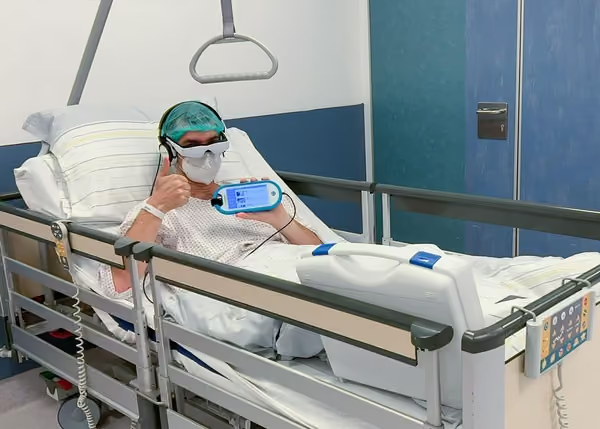
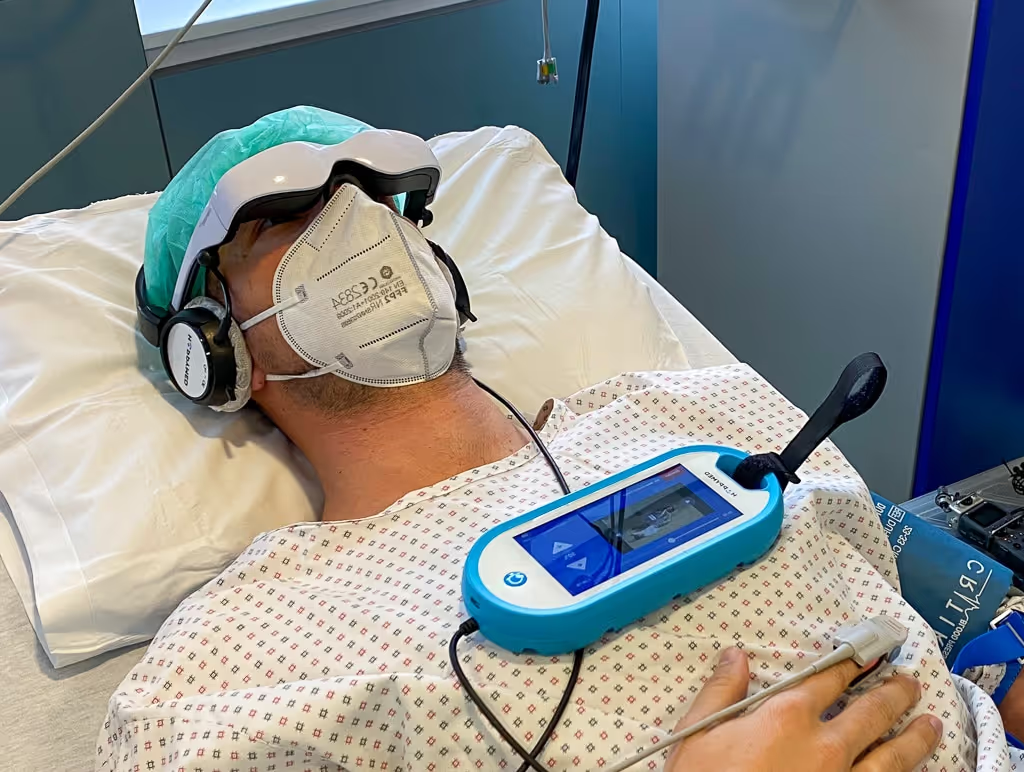
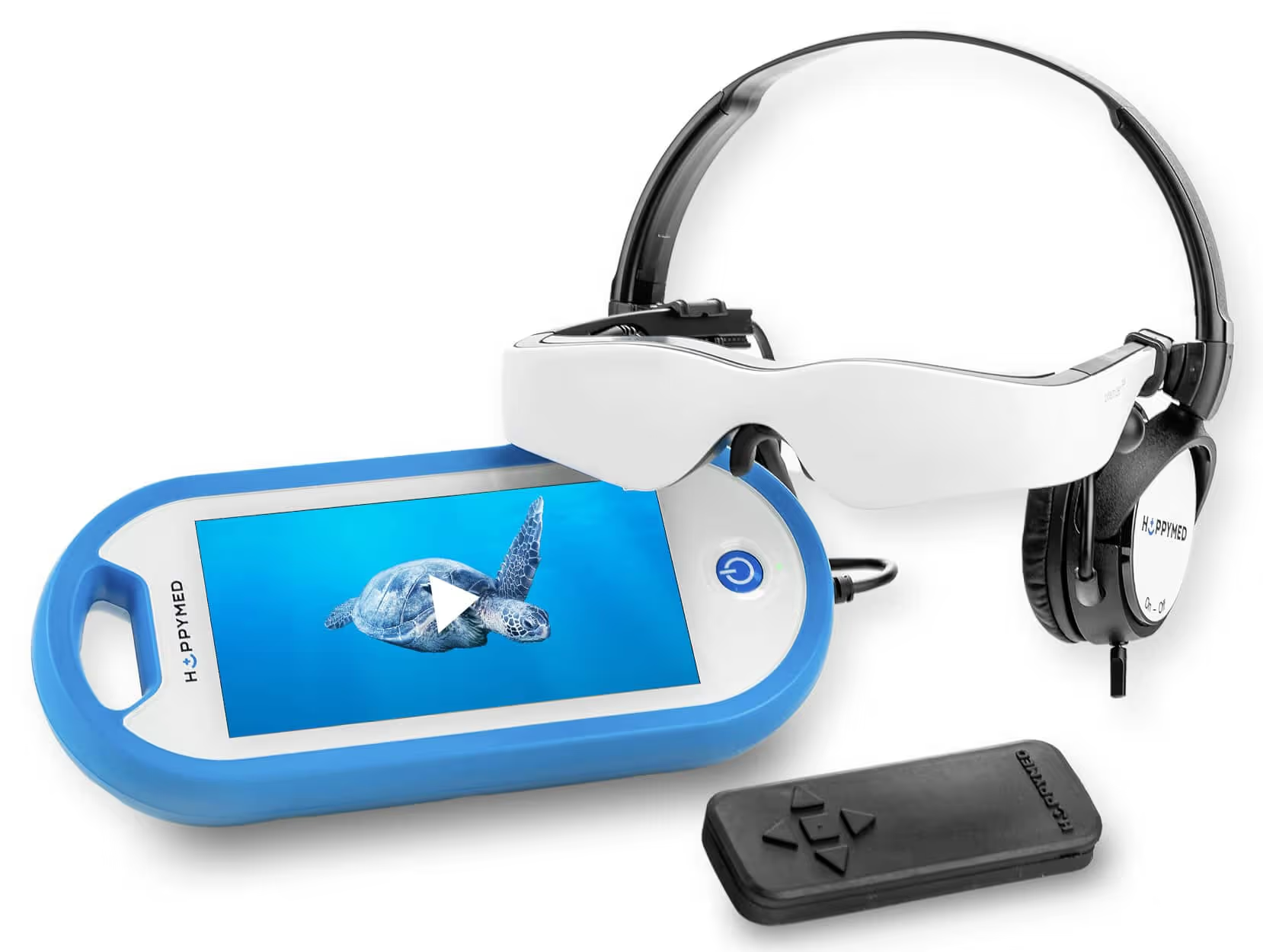
One possible disadvantage of hip surgery without general anaesthesia is that the patient stays awake during the surgery, which can trigger fear or nervousness in some people. This is where our HappyMed Video Glasses can be an ideal solution for reducing impressions from the operating room to a minimum. With these special video glasses, patients can watch relaxing films or listen to music during the surgery to ease their fear. And the best part: thanks to special Carl Zeiss optics, they work wonderfully for people who wear glasses too.
Watching a Maldives documentary during or before hip surgery
Experiences with hip surgery under spinal anaesthesia show that many patients feel fewer side effects such as nausea than with general anaesthesia. In their experiences with spinal anaesthesia, many patients report a faster recovery and a shorter stay in the recovery room. Hip surgery under regional anaesthesia therefore offers an attractive alternative.
Well suited for many types of hip surgery:
- Total hip replacement (THR): a hip surgery to insert an artificial hip, which is necessary in cases of severe osteoarthritis or joint damage
- Hip impingement surgery: to treat restricted movement and pain by correcting misalignments in the hip joint
- Hip labrum surgery: the repair or removal of the labrum (the joint lip) to restore joint function
- Hip bursa surgery: the removal of inflamed bursae that cause pain
- Minimally invasive hip surgery: a gentle technique in which the hip is operated on through smaller incisions to speed up healing
Vorteile
HappyMed Videobrille und ihre Vorteile
Seit 2015 im Einsatz, erprobt und über 300.000 Mal in über 200 deutschen Kliniken angewendet
Zertifiziertes Medizinprodukt in der 3. Produktgeneration
Begeisterndes Kinoerlebnis mit über 80 Filmen: Große Auswahl an Spiel- und Naturfilmen sowie Dokumentationen. Damit ist für jeden etwas dabei- die Filme kann man vorab auf unserer Website auswählen
Schärfeneinstellung für jedes Auge separat - auch für Brillenträger geeignet
Lautstärke und Filmprogramm über Fernbedienung eigenständig anpassbar
Leichte Bauweise: angenehm zu tragen bei kurzen und längeren Hüft-OPs.
Wahlmöglichkeit, sich 100 % oder nur 80 % von der OP abzuschotten (mit zusätzlicher Augenabdeckung)
HappyMed Videobrille
Tolle Rückmeldungen der Patienten:innen
MEDIENANGEBOT
Mr. Bean schauen, Vivaldi hören oder nach Lappland reisen - über 80 Inhalte lenken optisch und akustisch ab
Das Programm bietet wahlweise Unterhaltung oder Entspannung für jedes Alter. Hier können Sie die aktuelle Filmliste als PDF downloaden.







For doctors, it is the routine surgery
Over time, a hip prosthesis can cause problems such as loosening or wear, which is why careful aftercare is crucial. Despite these possible risks, however, hip surgery is considered one of the safest and most effective methods for significantly improving the quality of life of patients with long-standing hip pain.
Talking to the doctor and learning breathing exercises can help reduce the fear of hip surgery. A detailed explanation of the procedure and the risks gives you clarity, which often eases fears. This way, the doctor can hopefully significantly reduce your pain with surgery.

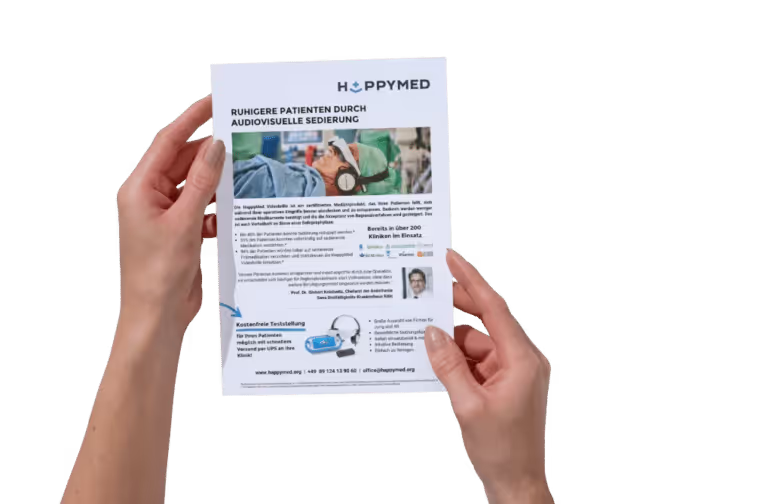
Für Ihren Anästhesisten beim Aufklärungsgespräch
Gehen Sie gut vorbereitet ins Anästhesie-Aufklärungsgespräch mit Ihrem Anästhesisten. Bringen Sie ihm den Aufklärungsbogen zu HappyMed mit, wenn Sie die HappyMed Videobrille für Ihre OP einsetzen möchten.