

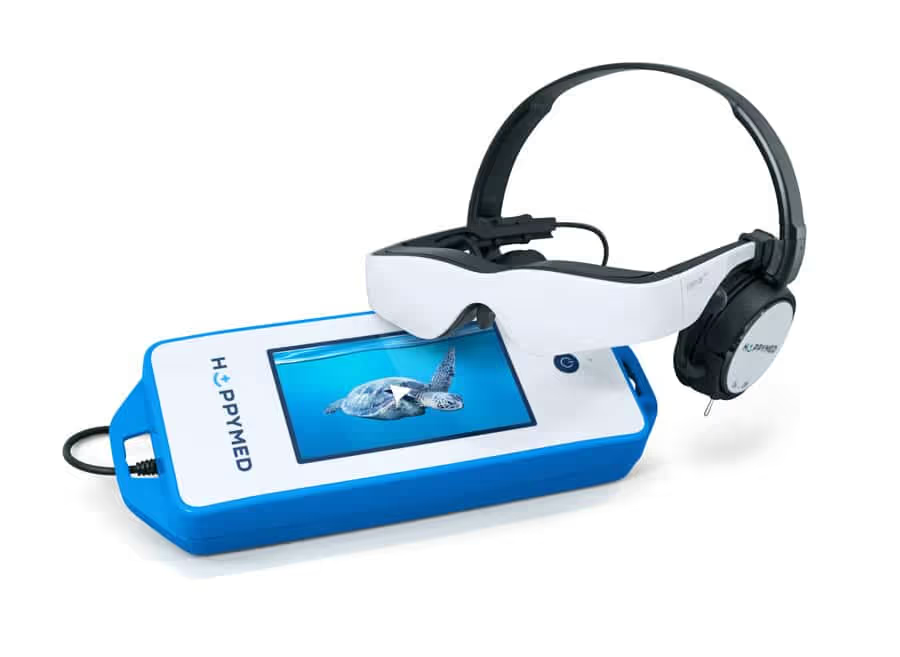
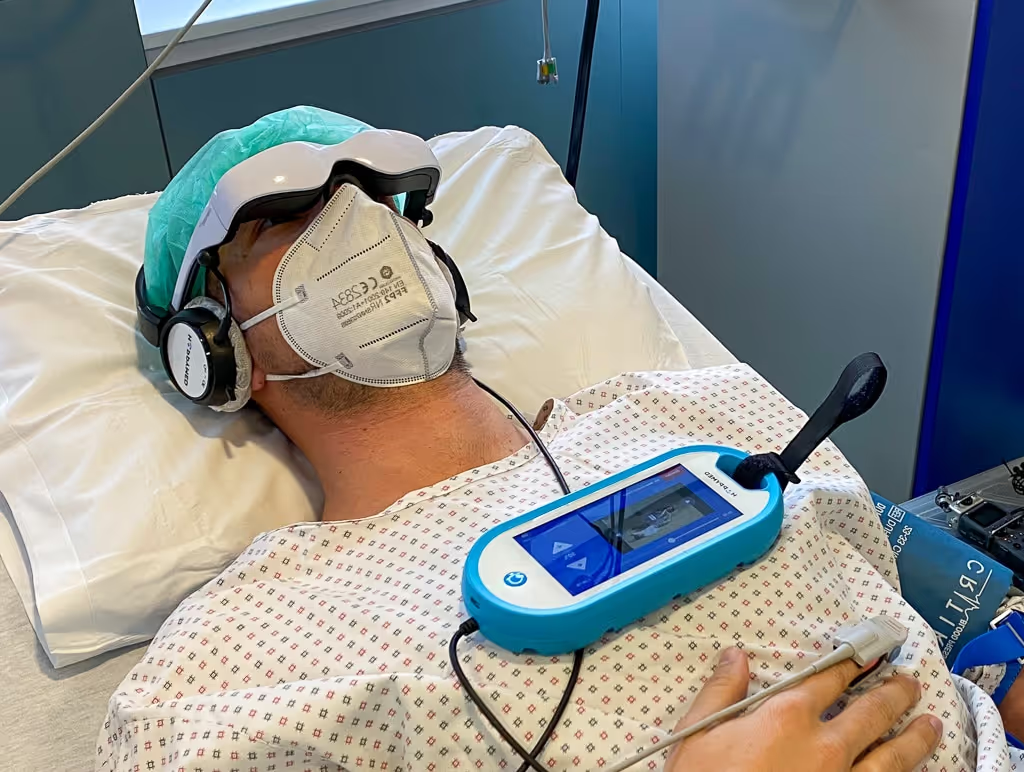
The HappyMed Video Glasses do not only excite adults, but are also very well received by children of various ages. When it comes to distraction and reducing the use of medication, HappyMed is the first choice of application.
At the Krankenhaus der Barmherzigen Schwestern Ried in Oberösterreich the glasses are used particularly often with children. And at the Klinikum Rohrbach, the two video glasses approved for the operating room are in continuous use. In 2019, around 1,400 procedures with a duration of up to three hours were performed using this method of distraction, compared to only 800 the previous year due to Corona.
© OÖG
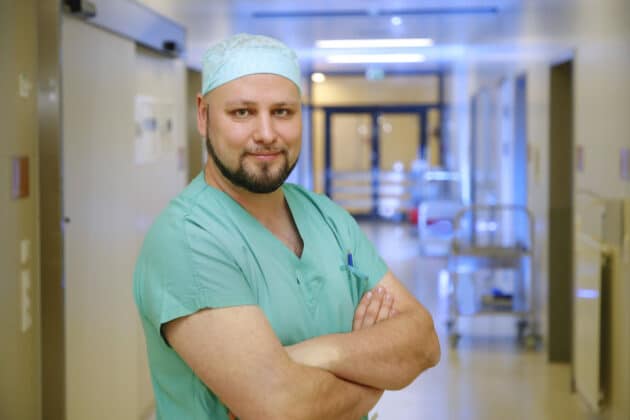
Primary Physician Dr. Kostja Steiner, Head of the Institute for Anesthesiology and Intensive Care Medicine at the Klinikum Rohrbach explains: "Until now, patients who were afraid of surgery were simply calmed with medication. However, we thought about how we could reduce the amount of sedatives and tranquilizers for the benefit of those affected. It is well known that 80 percent of sensory perception occurs through the eyes and ears; watching a movie during the operation is, so to speak, the optimal distraction."
And experience shows that it is even more difficult for children than for adults to deal with the unfamiliar situation during medical procedures. Therefore, both anesthesia departments rely on audiovisuelle Sedierung with the HappyMed Videobrille.
Children love "Vicky the Viking" and "Maya the Bee"

Senior Physician Dr. Gefion Gerner-Forstinger, Head of the Pediatric Anesthesiology Team at the Krankenhaus der Barmherzigen Schwestern in Ried, says: "I am thrilled with the positive effect on our young patients. The children who watch a movie on their way to the operating room are much less stressed and require almost no sedatives."
At the Klinikum Rohrbach, "Maya the Bee", but also "Heidi" and "Ferdy" are very popular among children aged four and older. In addition, children are allowed to put on the video glasses in the preparation room before being taken to the operating room. They then arrive relaxed for the operation and only notice the transfer from the bed to the operating table before proceeding with the medical and film program. Typical procedures include the removal of purulent tonsils or ear drum interventions.
Calming effect and 50 to 70 percent less medication
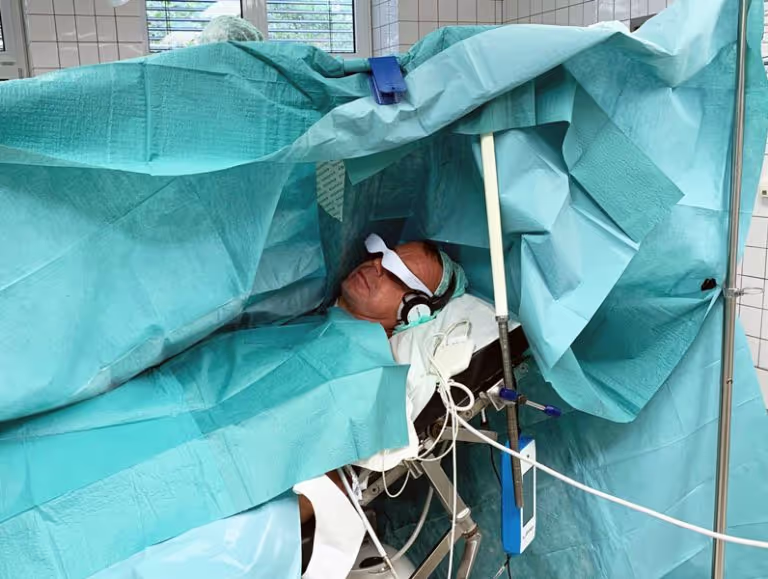
Adults appreciate the video glasses because they relax and require less medication. Primary Physician Dr. Kostja Steiner: "Through their use, we were able to verifiably reduce the amount of sedatives and tranquilizers by 50 to 70 percent. The huge advantage here is that patients need to stay in the labor-intensive recovery room for a much shorter time. While patients require about two to three hours of monitoring after a procedure under general anesthesia, movie watchers under local anesthesia can be transferred to the ward after just a good fifteen minutes, as soon as it is confirmed that they are not in pain. This also brings significant relief in terms of staffing."
The licensing costs are marginal and negligible!
"The patient has a cinema feeling, and we are certain that the high requirements for safety and hygiene—the video glasses are easy to disinfect—and licensing issues are covered," says Primary Physician Dr. Kostja Steiner: "In addition, the content selection is updated every few months."
Relaxed children during medical procedures

Sources
1) 26.06.2021 – Oberösterreichisches Volksblatt – Videobrille lenkt von OP ab (https://volksblatt.at/videobrille-lenkt-von-op-ab/)
2) 24.09.2020 – Oberösterreichische Nachrichten – Videobrillen lenken am Weg in den OP-Saal ab (https://www.nachrichten.at/oberoesterreich/innviertel/videobrillen-lenken-patienten-am-weg-in-den-op-saal-ab;art70,3303837)
Schreibe einen Kommentar