
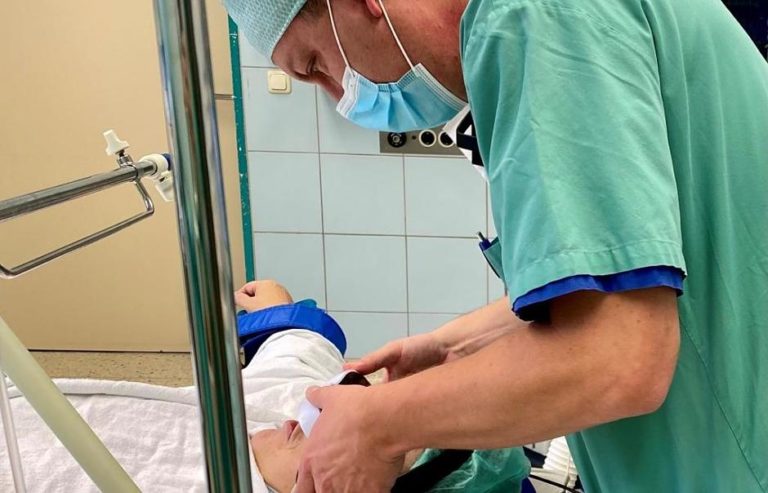
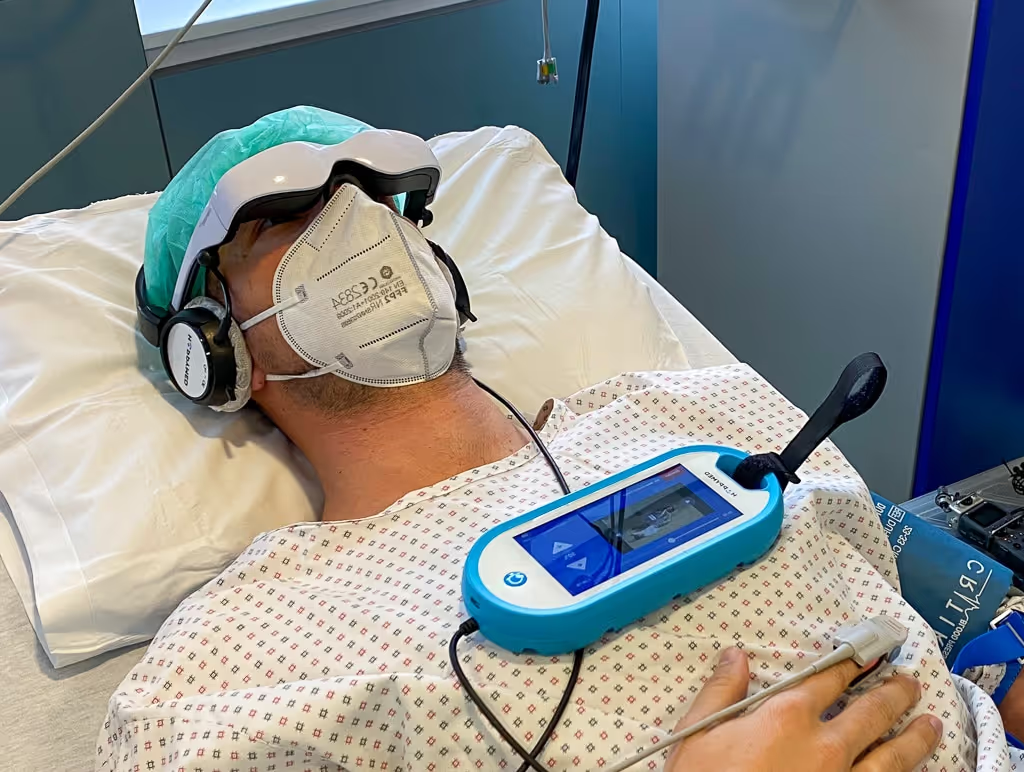
In the Department of Anesthesiology at the Kreiskrankenhaus Schrobenhausen, the effect of the HappyMed Video Glasses was investigated in 88 patients over a period of 5 months.
Dr. Markus Schmola, Chief Physician of the Department of Anesthesiology, Surgical Intensive Care and Emergency Medicine, explains: "Many of our patients do not want to know exactly what is happening during surgery. However, once anxiety sets in, we had no choice in the past but to administer a sedative. But the medications have a drawback: the side effects are not always proportional to the procedure. Confusion and disorientation can be the result upon waking."

© Kreiskrankenhaus Schrobenhausen
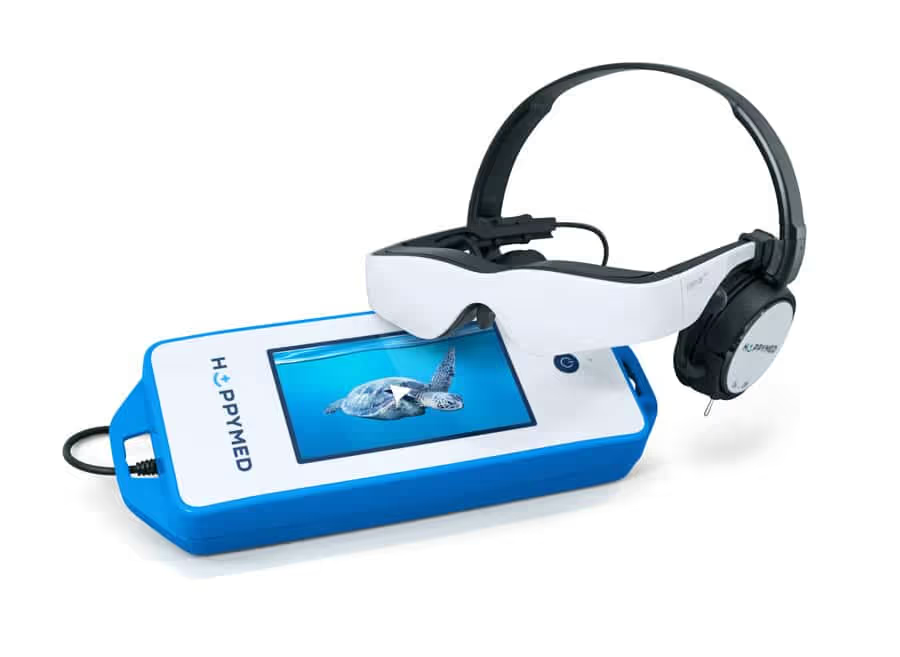
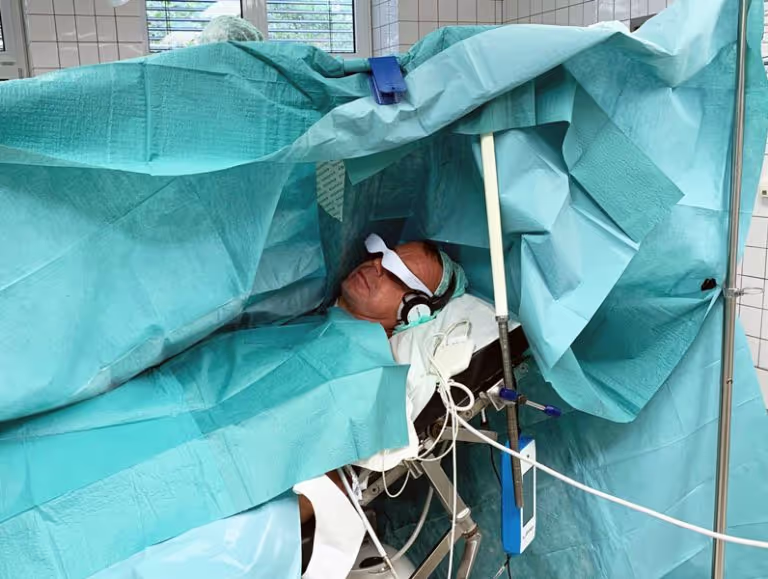
Therefore, the Anesthesiology Department of the Kreiskrankenhaus now relies on audiovisual sedation with the HappyMed Video Glasses.
The results of the study were summarized in a master's thesis on the topic "Introduction and Evaluation of Video Glasses in an Anesthesiology Department of a Municipal Hospital" by Julia Schmola. The work dealt not only with the effect of audiovisual sedation on patients, but also includes process-oriented topics as well as the collection of economic factors.
The 5 most important results:
- The subjective anxiety level of the patients was reduced significantly through the use of the glasses.
- Over 70% of patients felt more relaxed during the procedure using the glasses. Over 75% of the staff perceived the treatment situation as more relaxed when the patient used the glasses. From the staff's perspective, over 85% of patients benefited from the use of the glasses.
- In over 80% of the procedures, the medical team estimated that sedatives could be partially or even completely reduced.
- Due to the hospital structure, the glasses were used in over 80% of procedures, primarily in older patients (>50 years). Although the glasses are a highly technical product, it was shown that even patients with low tech affinity can use the video glasses without any problems.
- The decision to introduce video glasses in the Department of Anesthesiology was beneficial from the perspective of the employees. A high degree of job enrichment and many advantages through the use of the video glasses were mentioned in the areas of patient comfort and savings on sedative medications. Ultimately, there was no one who would not recommend the product.
Acquisition of the HappyMed Video Glasses is economical
Finally, an economic analysis demonstrated that despite primary additional costs, the use of the HappyMed Video Glasses is also economical due to positive secondary and tertiary effects. A projection leads to the conclusion that the glasses pay for themselves upon preventing the single follow-up complication of "delirium" once per 113 applications of the video glasses.
From an economic perspective, however, the marketing effect of the video glasses should not be overlooked either. For such low expenditures as for the HappyMed Video Glasses, other marketing measures are hardly feasible. For a more precise analysis of these effects, the author recommends further studies.
Key facts
Investigation period October 2020 – March 2021, patients n=88, specialists n=17
Schreibe einen Kommentar