

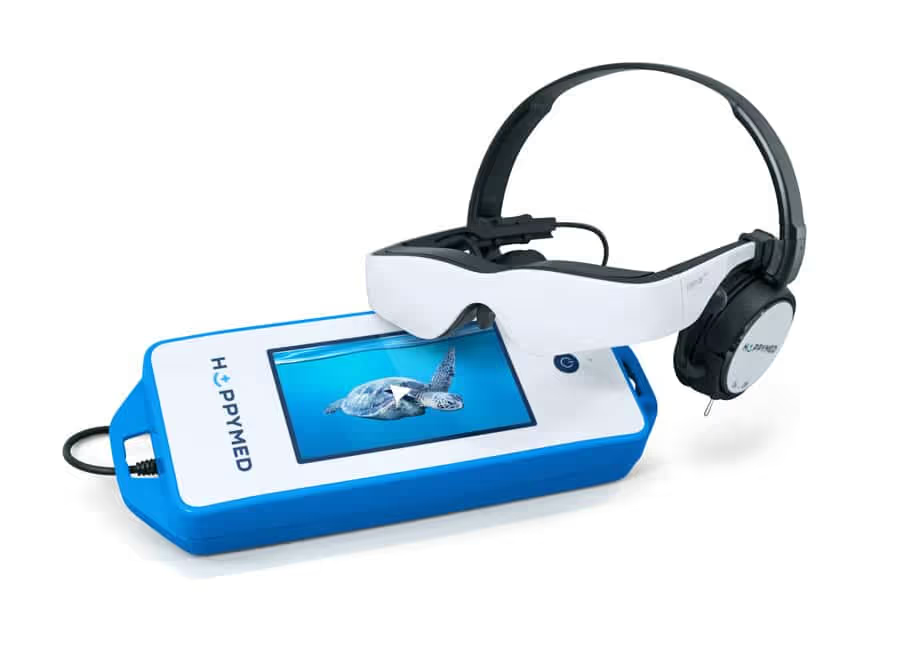
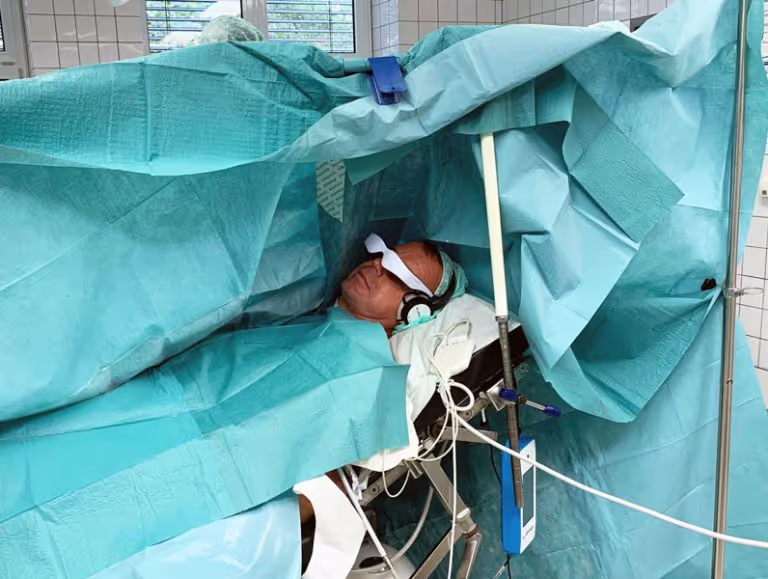
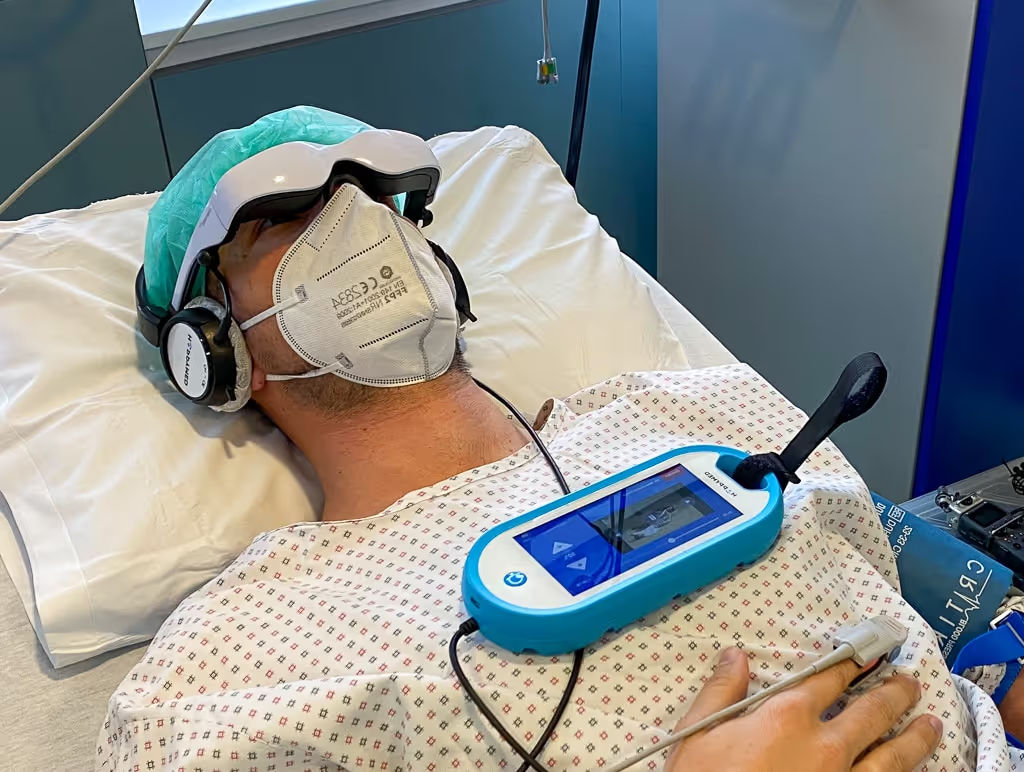
The HappyMed Video Glasses, already established in orthopedic surgery, were tested for the first time on patients undergoing transcatheter aortic valve implantation (TAVI). At the German Heart Center in Berlin, 27 patients aged 60 and older had the opportunity to use HappyMed before and during the treatment.
The team of the anesthesiology department recognized the potential of HappyMed to distract patients during transcatheter aortic valve implantations (TAVI), which are normally performed under local anesthesia and take approximately 60 minutes.
"We were looking for a way to acoustically protect our patients from their surroundings in the operating room. Conversations among the medical staff during the operation can cause anxiety and uncertainty in patients. With HappyMed, we go one step further by comforting our patients with both acoustic and visual distraction."
Using questionnaires, patients were asked about their well-being and satisfaction with HappyMed, but doctors also provided their feedback on the use of HappyMed in the field of cardiovascular procedures. The evaluation results were consistently positive: 70 % of the patients would like to use the HappyMed Video Glasses again during this type of treatment. In 88 % of cases, doctors would recommend the use of HappyMed.
"Essentially, most patients are very nervous before and also during the operation. Since most patients are elderly and high-risk, the operation carries an additional risk for severe complications such as sudden blood loss or cardiac arrhythmias. The HappyMed Video Glasses serve as a non-pharmacological alternative to sedation, which is typically used to treat patient anxiety during cardiovascular procedures. As a result, further medication-induced risks of complications can be minimized for patients who are already at risk for severe complications."
59 % of the patients stated that HappyMed made the procedure itself more bearable for them. 11 out of 27 patients felt less anxious and more relaxed as soon as they put on the video glasses. From the doctors' perspective, the patients clearly benefited from the option of audiovisual distraction through movies, music, and meditation. The patients were really satisfied with the selection of movies. 62 % of them were "totally satisfied".
Furthermore, the German Heart Center in Berlin was chosen to streamline one of its TAVI procedures as part of the well-known and international cardiovascular congress Aortic Live 2018 in Essen. The patient scheduled for this operation decided to use the HappyMed Video Glasses during the procedure and thereby demonstrated the new technology to more than 400 doctors from 41 countries.
HappyMed was pleased with this first collaboration with the Deutsches Herzzentrum Berlin and is looking forward to the TAVI pilot study with 100 patients planned for 2019.
Source:
Schreibe einen Kommentar