

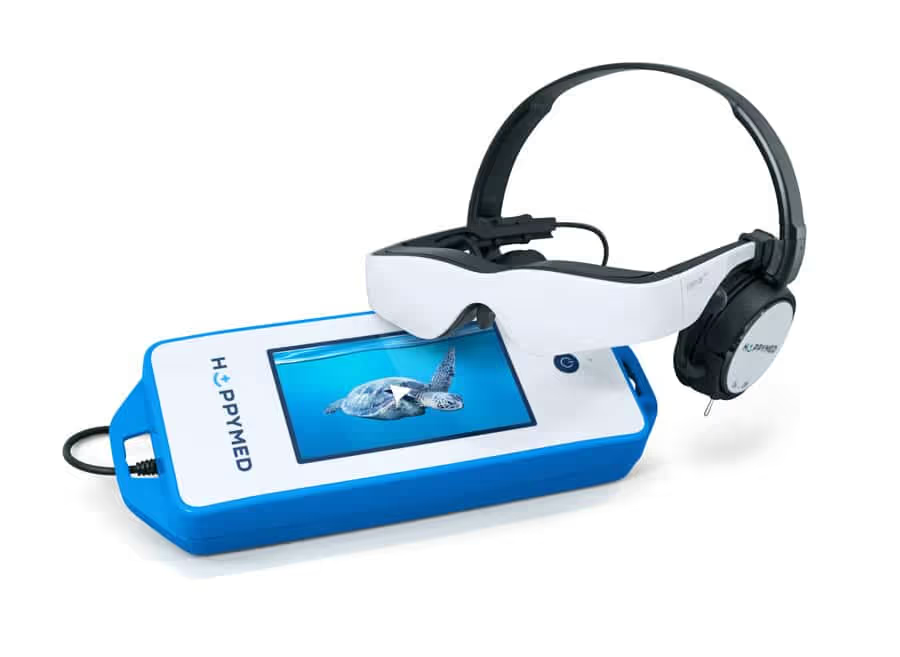
Since 2017, the HappyMed Videobrille have been a great success at numerous hospitals in the Helios hospital group. The Helios hospitals in Schleswig, Leisnig and Schkeuditz, as well as Herzzentrum Leipzig and Helios Klinik Vogelsang, offer the video glasses to their patients.
"Our patients are absolutely thrilled with the new offering. We mainly offer the glasses to patients who want a distraction during a partial anesthetic or who are very nervous before surgery. Immersed in the sights and sounds, they quickly forget that a medical procedure lies ahead or that they are in the operating room."
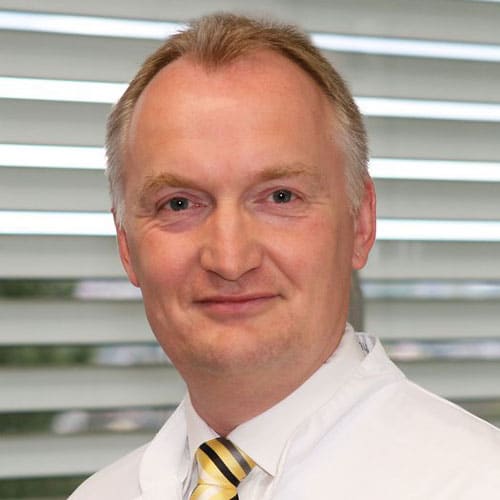
Dr. Carsten Külls
Head of Anesthesiology and Intensive Care Medicine, Helios Klinikum Schleswig
Report by MDR aktuell, "Glasses instead of pills": HappyMed in use at Helios Schkeuditz
Prof. Dr. Strauss from HELIOS Klinikum Berlin-Buch on HappyMed
"We are completely satisfied. Our staff have fully accepted the system. The patients are absolutely delighted with it. They are really well distracted, they are completely relaxed."

Prof. Dr. Strauss
Head of Anesthesiology and Perioperative Medicine, Helios Klinikum Berlin-Buch
Case Studies from Helios Klinikum in Erfurt
Case Studies from Helios Klinikum in Erfurt
"The HappyMed Video Glasses are easy to use and offer a wide selection of films. What convinces me most is the extremely high level of patient acceptance. We care for patients in gynecology and obstetrics, pediatric surgery and oral and maxillofacial surgery, and the feedback we have received has been overwhelmingly positive."
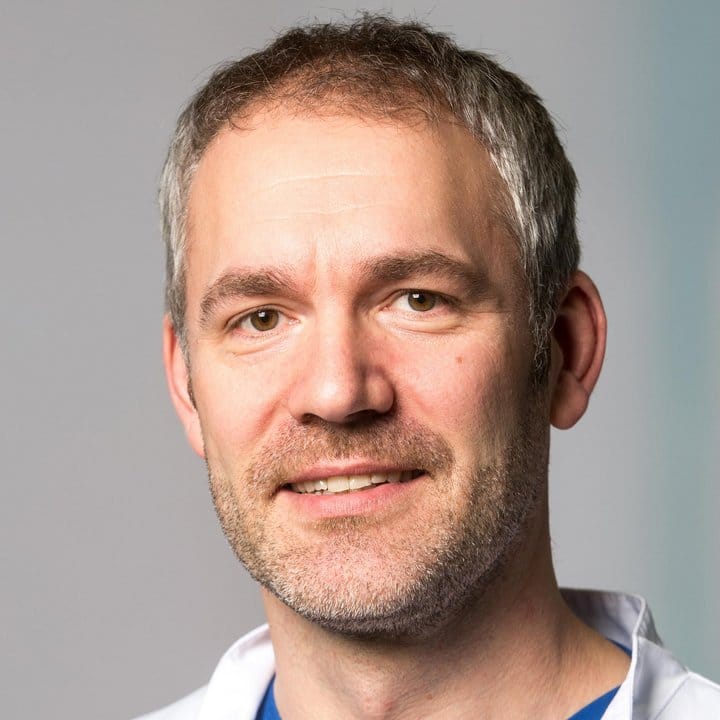
Dr. Christian Icke
Head of Anesthesiology at HELIOS Klinikum Blankenhain and former Senior Consultant in Anesthesiology at HELIOS Klinikum Erfurt
"At first, HappyMed was dismissed here as a technical toy. Today, all patients who require medication-based sedation are treated with HappyMed first. We have learned that audiovisual decoupling with HappyMed is more comfortable for patients and free of side effects. This noticeably reduces the workload for our team, both in the operating room and in the recovery room."
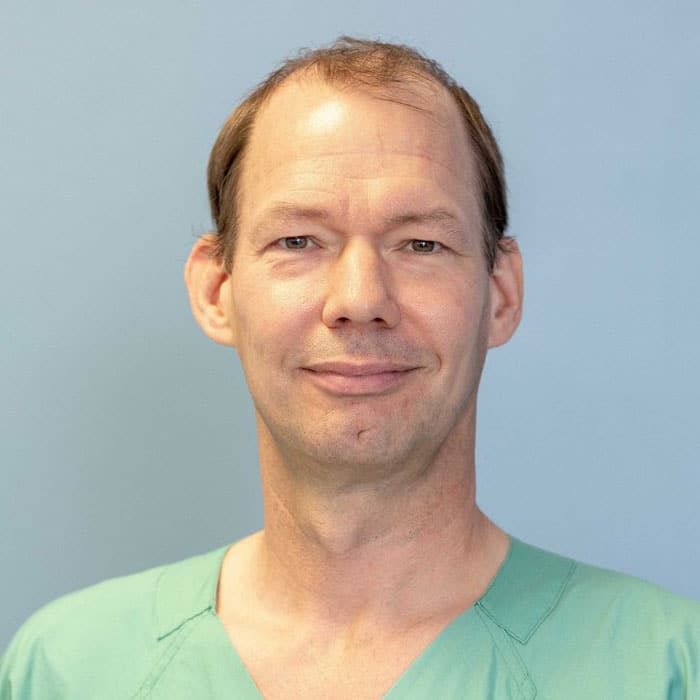
Dr. Kai Morsbach
Lead Senior Consultant in Anesthesiology, Emergency Medicine & Perioperative Pain Management and OR Coordinator, HELIOS Klinikum Erfurt
"The video glasses are a good option for patients who want to distract themselves in the perioperative setting. For me, this is a clear gain for patient wellbeing. We certainly have more possible applications than we currently have devices."

Dr. Achim Spenner
Senior Consultant in Anesthesiology, Perioperative Medicine and Pain Management, HELIOS Klinikum Erfurt
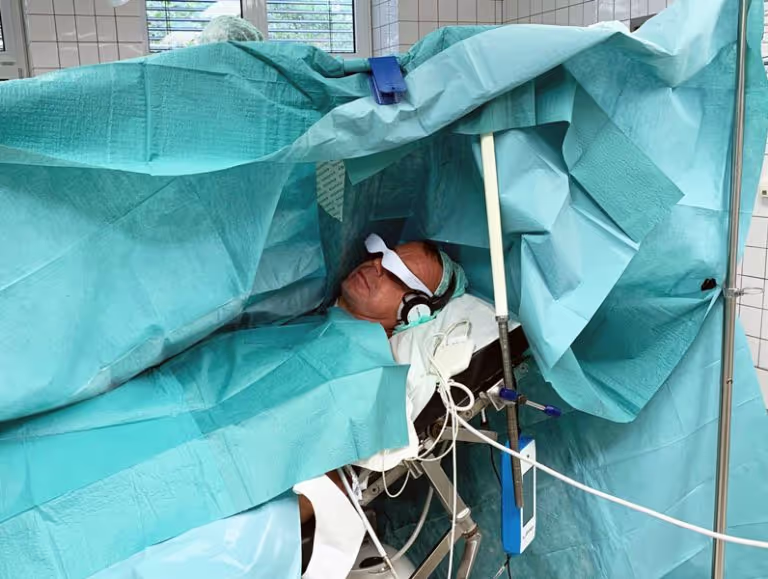
Calming cinema experience in the operating room at Helios Klinik Leisnig

"Regional anesthesia is now commonly used for operations on the arms, legs, feet or hips. To give these patients a way to distract and calm themselves, we have introduced the HappyMed glasses at our hospital, in addition to music via headphones. As a result, we hardly need any sedative medication, which also reduces side effects, so that patients recover more quickly after surgery," explains Almut Trapp, Lead Senior Consultant at the Department of Anesthesiology and Intensive Care Medicine at Helios Klinik Leisnig.
Herzzentrum Leipzig: HappyMed in the EP lab during pacemaker and defibrillator implantations
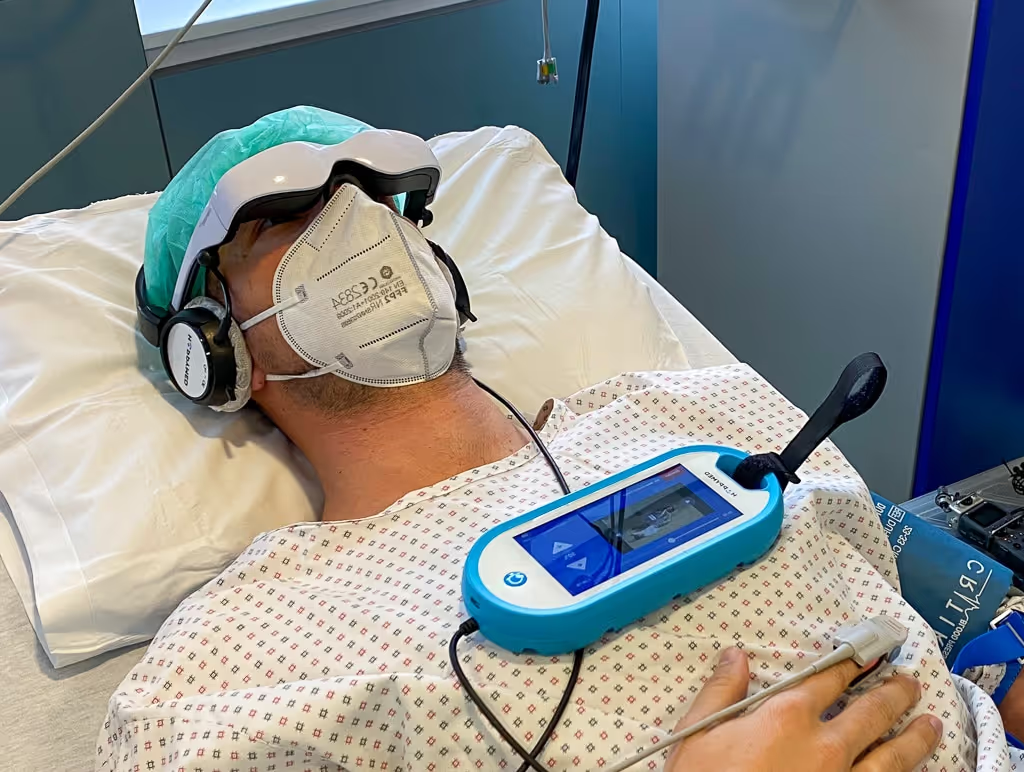
Herzzentrum Leipzig aims to reduce the anxiety and pain that patients often experience during outpatient procedures. For this purpose, the HappyMed Video Glasses are used in the electrophysiology lab, or EP lab for short, during pacemaker and defibrillator implantations.
The effects of using the glasses during outpatient surgery on patients are being examined in a medical study. For this purpose, a total of 200 patients are being operated on with and without the video glasses. The study is led by Dr. Kerstin Bode, Senior Consultant in cardiac electrophysiology, supported by resident physician Matthias Lerche and Beatrix Halama, head of the EP and cardiac catheterization lab.
Sources:
- Sächsische.de – Wenn während der Operation ein Hollywood-Klassiker läuft – 06.01.2022
- Pressemeldung der Helios Klinik Leisnig – 05.01.2022
- Pressemeldung der Helios Klinik Schleswig
- Pressemeldung vom Herzzentrum Leipzig vom 1.4.2019
- Volksstimme.de über HappyMed im Helios Klinik Vogelsang vom 18.12.2019
Schreibe einen Kommentar